
Traditional finance and crypto are moving closer together. BlackRock's spot Bitcoin ETF, IBIT, had grown to about $68.3 billion in net assets by September 22, 2026, showing how digital assets have moved deeper into mainstream investment products. At the same time, traders increasingly follow the same macro events across Bitcoin, stocks, currencies and commodities rather than treating each market in isolation.
Trading platforms are adapting to that shift by expanding beyond a single asset class. CoinGecko found that TradFi trading volume on major crypto exchanges reached $1.45 trillion in the first half of 2026, about 10 times the volume recorded in all of 2025. Open interest in TradFi perpetual contracts also climbed from $60 million at the start of 2025 to $4.67 billion by the end of June 2026.
BingX is moving in the same direction by building a broader multi-asset trading platform around both crypto and traditional markets. For traders, that means being able to follow more of the opportunities shaping global markets from one place, instead of separating crypto from stocks, forex, indices and commodities across different platforms. This guide explains what a multi-asset trading platform is, how the model works, and how BingX brings these markets together within one trading experience.
What Is a Multi-Asset Trading Platform?
A multi-asset trading platform brings several financial markets into one connected trading environment. Instead of maintaining separate accounts for crypto, stocks, forex, indices, or commodities, traders can monitor different markets, compare price movements, and place trades through the same platform. These platforms may combine spot assets, perpetual futures, contracts for difference, or other instruments, so traders still need to understand how each product works.
BingX is a multi-asset trading platform that combines its established crypto ecosystem with access to a wider range of global markets. Crypto spot, futures, and copy trading sit alongside TradFi perpetual futures and CFDs covering stocks, forex, indices, and commodities, giving traders broader market access without leaving the BingX platform.
Read More: BingX Evolves into a Multi-Asset Trading Platform, Connecting Users to Global Opportunities
Multi-Asset Platforms vs. Single-Asset Platforms: What Are the Differences?
The biggest difference is how much of the market a trader can access from one account. A single-asset platform focuses on one category, such as crypto or stocks, which can make the experience simpler and more specialized. A multi-asset platform gives traders broader access, making it easier to compare markets, follow cross-asset trends, and move between different opportunities as conditions change.
Neither model is automatically better for every trader. Single-asset platforms can suit users who want to specialize, while multi-asset platforms are designed for traders who want more flexibility across asset classes. The trade-off is that broader access also requires a better understanding of different trading hours, volatility, contract structures, and risks.
|
Feature |
Multi-Asset Platform |
Single-Asset Platform |
|
Market access |
Multiple asset classes |
Usually one asset class |
|
Account setup |
Markets connected through one account |
Other markets may require separate accounts |
|
Market view |
Easier cross-market comparison |
Deeper focus on one market |
|
Capital management |
More centralized balance and PnL tracking |
Capital stays within one product ecosystem |
|
Learning curve |
Higher because instruments differ |
Usually simpler to learn |
|
Best suited for |
Traders who want broader market access |
Traders focused on one market |
BingX: A Multi-Asset Platform with No.1 TradFi Perpetual Liquidity
BingX combines more than 1,000 crypto assets with over 500 TradFi instruments across stocks, indices, forex, metals, and commodities. TradFi trading volume reached as much as 50% of total platform volume during Q1 2026, showing how quickly activity has expanded beyond crypto. This broader coverage gives traders more ways to respond when opportunities shift across asset classes.
- No.1 TradFi perpetual futures liquidity: BingX TradFi perpetuals rank No.1 for liquidity across major markets including gold, US stocks, indices, semiconductors, and ETFs. Deeper order books can support smoother execution and larger trades.
- More than 500 TradFi instruments: Users can trade stocks, indices, forex, metals, and commodities alongside BingX crypto markets without moving between separate platforms.
- 24/7 access to major global markets: A growing range of TradFi instruments, including stocks, indices, gold, silver, and oil, can be traded around the clock beyond traditional exchange hours.
- One ecosystem for crypto and TradFi: TradFi perpetuals use USDT as margin, while the separate CFD service uses USDx. Users can access crypto and traditional markets alongside Futures Copy Trading, CFD Copy Trading, and AI tools.
- Built for more than 40 million users: More than 40 million users globally trade on BingX, supported by over eight years of operations and a $150 million Shield Fund. The same infrastructure now supports a broader range of markets.
- Broader market research and education: BingX Academy covers crypto, global markets, and individual companies through AI supply-chain explainers, earnings overviews, and price outlooks for names such as Nvidia, Apple, Google, and more.
What Assets Can You Trade on BingX's Multi-Asset Platform?
On BingX, users can access crypto alongside a growing range of traditional financial markets from the same account. This includes stocks, ETFs, forex pairs, major indices, commodities, and precious metals through products such as TradFi perpetual futures and CFDs. Availability, trading hours, leverage, and contract specifications can vary by product, asset, and region.
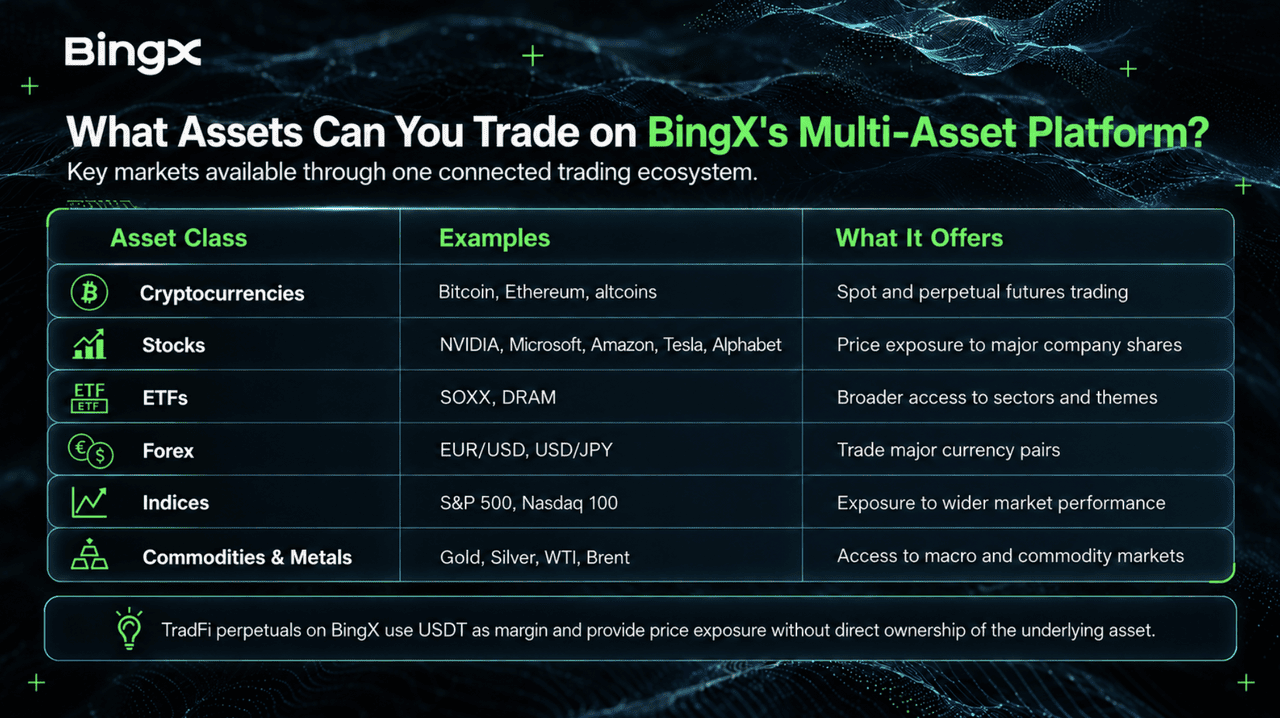
- Cryptocurrencies: BingX supports spot and derivatives trading for major assets such as Bitcoin and Ethereum, alongside a wider range of altcoins. Spot trading involves the crypto itself, while perpetual futures provide leveraged price exposure.
- Stocks: Users can trade products linked to global companies such as NVIDIA, Microsoft, Amazon, Tesla, and Alphabet, gaining price exposure without direct share ownership.
- ETFs: BingX offers ETF-linked markets, including sector and thematic products such as semiconductor-focused SOXX and DRAM. These provide broader exposure to a group of companies or an investment theme.
- Forex: Major pairs such as EUR/USD and USD/JPY let users trade changes in relative currency values, which are often influenced by rates, central-bank policy, inflation, and economic data.
- Indices: Markets such as the S&P 500 and Nasdaq 100 provide exposure to broader stock-market performance rather than individual companies.
- Commodities and metals: BingX TradFi includes gold, silver, WTI crude oil, Brent crude oil, and other commodity-linked products. Selected markets such as gold and crude oil are also available through CFDs for eligible users.
TradFi perpetual futures on BingX use USDT as margin, while BingX CFDs use USDx margin and settle the difference between opening and closing prices through liquidity-provider quotes. Both provide price exposure without direct ownership of the underlying assets.
How to Start Trading Different Assets on BingX
BingX separates crypto and traditional markets into clear trading sections. Crypto can be traded through Spot or Perpetual Futures, while traditional markets are available through TradFi perpetual futures and the separate CFD service.
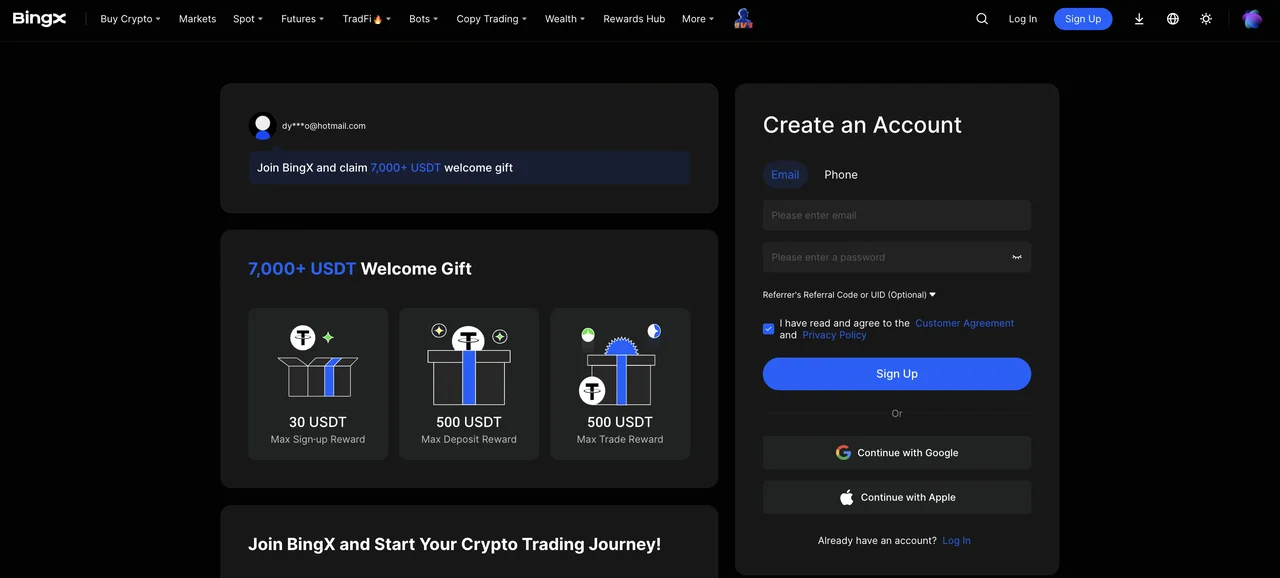
Step 1: Create an account and complete verification. Sign up through the official BingX website or app complete the identity verification (KYC) required in your region. Check that the selected product is available in your region before funding the account.
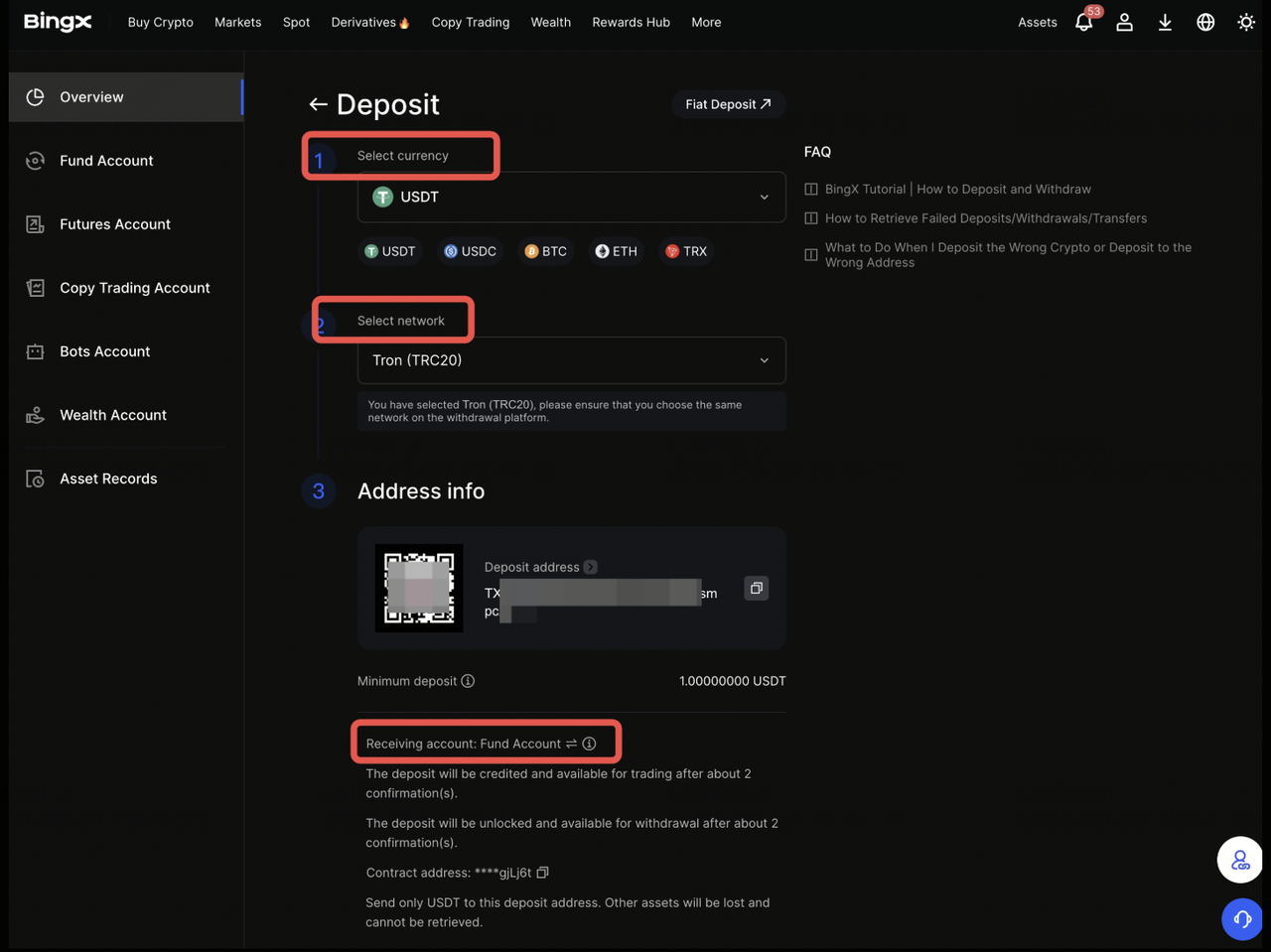
Step 2: Fund the appropriate trading account. Deposit a supported asset and transfer funds to the account used for the selected market. TradFi perpetual futures use USDT as margin. CFD trading requires users to activate the CFD service and convert funds into USDx before opening a position.
Step 3: Choose the market and product structure.
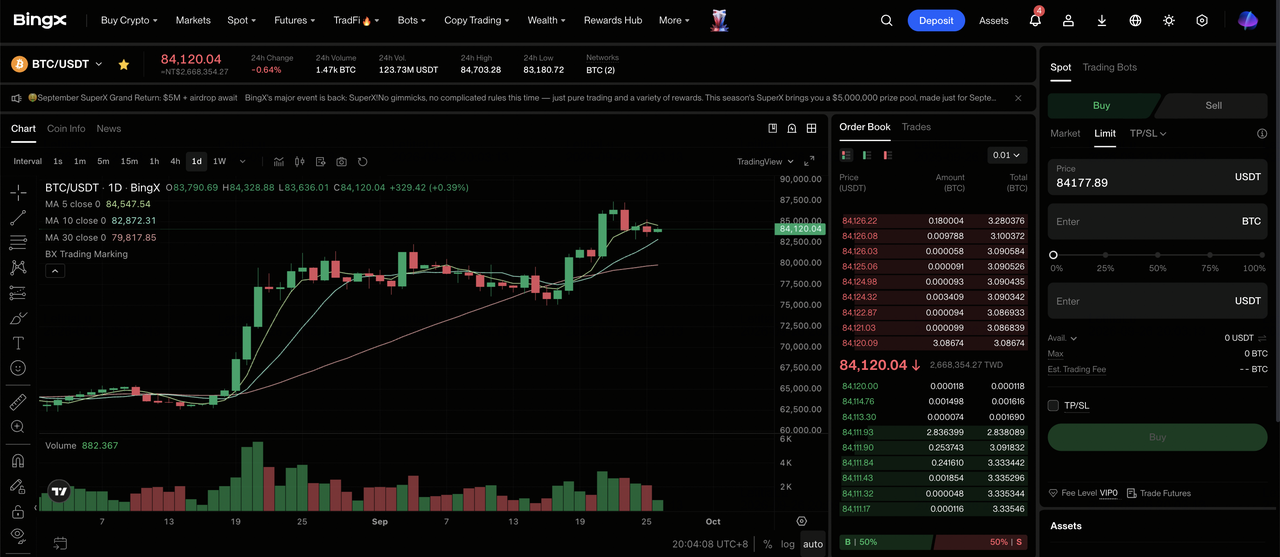
- For crypto: Open Spot to buy and sell supported cryptocurrencies, or Perpetual Futures to trade leveraged long or short positions.
- For TradFi perpetuals: Open TradFi Perpetual Futures to trade USDT-margined contracts linked to stocks, ETFs, forex, indices, metals, and commodities.
- For CFDs: Open CFD Futures to trade supported traditional-market products through the CFD model using USDx margin.
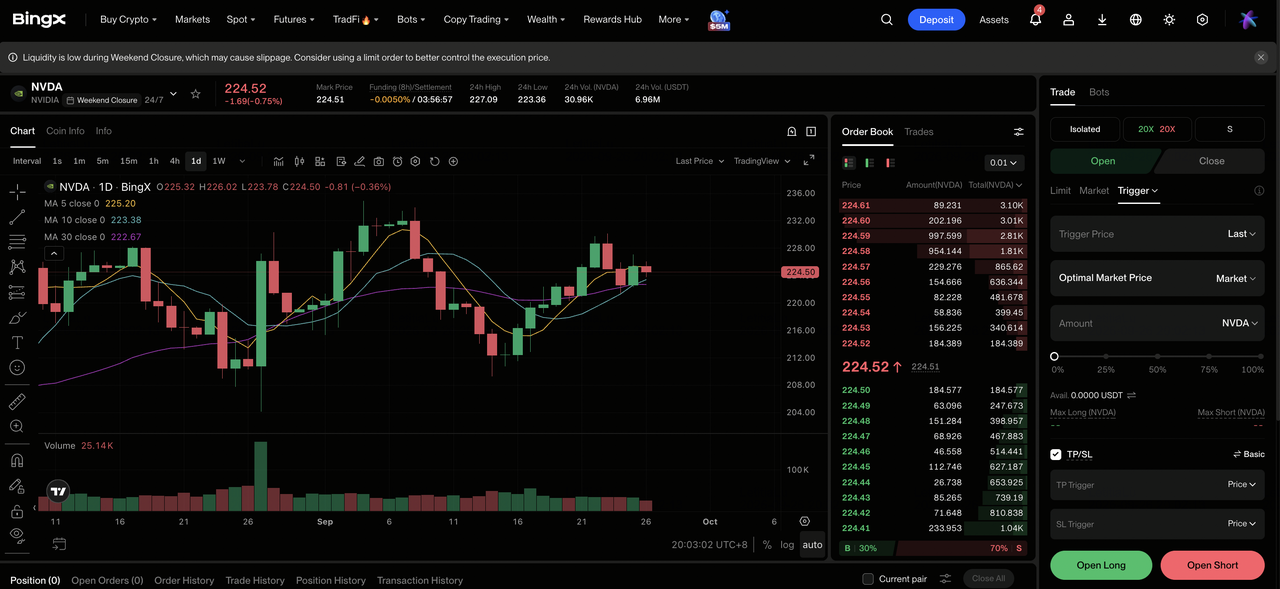
Step 4: Place and manage the trade. Select the instrument, choose a market or limit order, enter the position size, and set leverage where applicable. After execution, monitor margin, unrealized PnL, liquidation price, and any stop-loss and take-profit orders.
Conclusion: Why BingX Is the Best Platform for Multi-Asset Trading?
Multi-asset trading platforms bring crypto, stocks, forex, indices, and commodities into one connected trading environment. On BingX, this makes it easier to compare market movements, follow how global events affect different asset classes, and trade across markets without switching between separate platforms.
Before trading, identify whether the product is a spot asset, perpetual future, or directly held security because each carries different ownership rights, fees, margin requirements, and risks. Beginners should start with familiar markets, use small positions and conservative leverage, and review the current product terms before every trade.
Disclaimer: This article is provided for educational and informational purposes only. It does not constitute financial, investment, legal, or tax advice. Trading crypto, derivatives, stocks, forex, indices, and commodities involves risk and may result in partial or total loss. Always conduct independent research and consider your financial circumstances and risk tolerance before trading.
Related Reading
- How to Get Started with Perpetual Futures Trading on BingX: A 2026 Beginner's Guide
- How to Start Spot Trading on BingX: A Beginner’s Guide (2026)
- How to Trade Forex, Commodities, Stocks, and Indices With BingX TradFi: A Beginner’s Guide (2026)
- What Is BingX CFD and How to Trade CFD on BingX? A Beginner's Guide (2026)
- CFDs vs. Perpetual Futures: What Are the Differences and How to Trade on BingX? (2026)
FAQs About Multi-Asset Trading on BingX
1. Can I Trade Stocks on BingX?
Yes. BingX offers access to major global stocks through stock perpetual futures and, where available, direct stock and ETF products. Product availability, trading hours, leverage limits, and ownership rights vary by instrument and region, so traders should review the specifications before trading.
2. Do I Own the Stock When Trading Stock Perpetual Futures?
No. Stock perpetual futures provide exposure to share-price movements without giving traders ownership of the underlying shares, voting rights, or direct dividends. Direct stock and ETF investing is offered separately and follows different product terms and regional requirements.
3. Can I Use USDT to Trade Crypto and TradFi on BingX?
Yes. BingX TradFi perpetual futures use USDT as margin, allowing traders to access crypto and traditional-market derivatives using the same margin asset. Funds may still need to be transferred to the appropriate trading account, and spot holdings remain separate from futures margin.
4. Is BingX Multi-Asset Trading Suitable for Me as a Beginner?
It can be suitable for beginners who learn one product at a time and understand the risks before trading. Demo trading, small position sizes, and conservative leverage can help new traders become familiar with different market drivers, trading hours, fees, and liquidation mechanics.
5. What Is the Difference Between BingX TradFi Perpetual Futures and CFDs?
BingX TradFi perpetual futures use USDT margin, adjustable leverage, a multi-level order book, and dynamic funding rates. BingX CFDs use USDx margin, fixed leverage limits, liquidity-provider bid and ask quotes, and costs that can include the spread and swap fees. Both provide price exposure without ownership of the underlying asset.
Read More: CFDs vs. Perpetual Futures: What Are the Differences and How to Trade on BingX? (2026)
