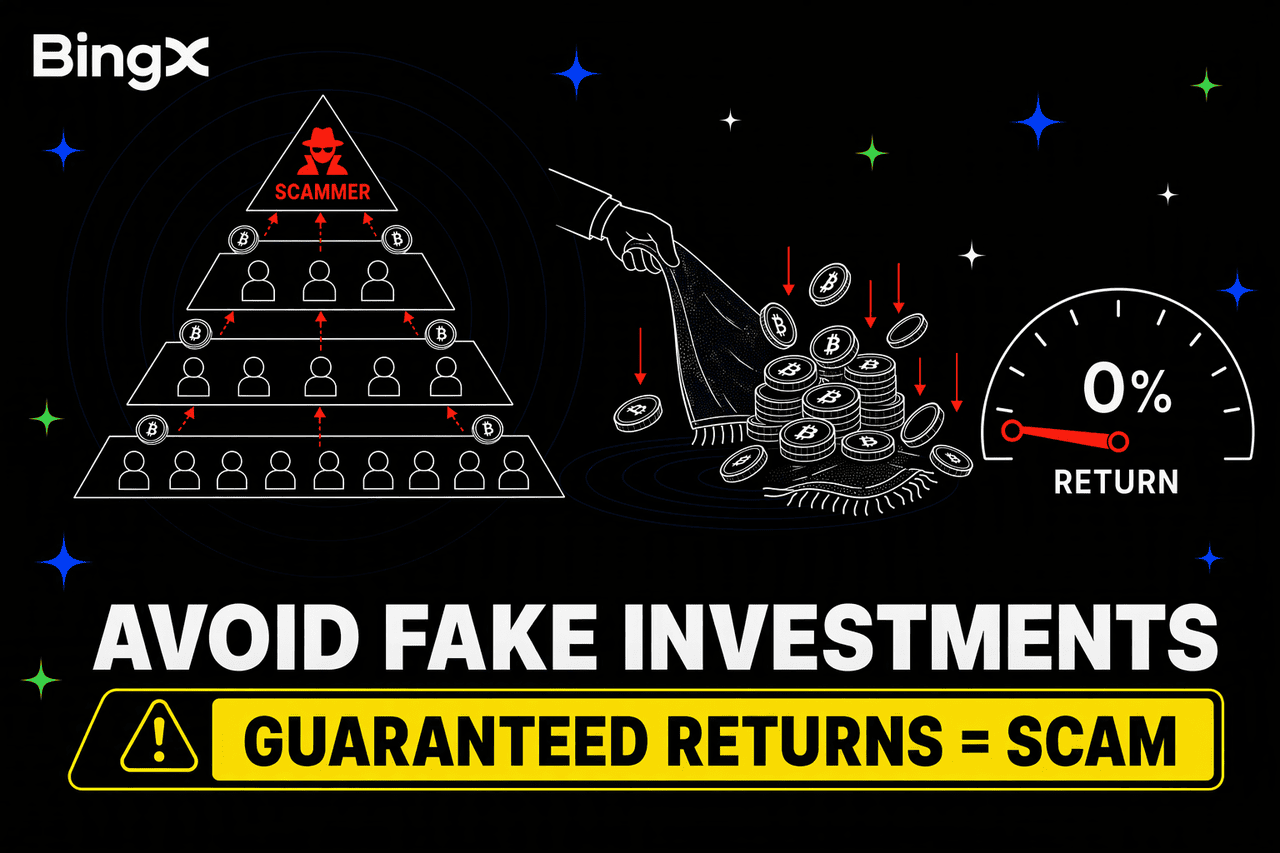
Crypto investment scams often begin with promises of unusually high returns, exclusive opportunities, or supposedly risk-free trading strategies. Fraudsters use fake investment platforms, misleading token promotions, and private trading groups to attract deposits, while some legitimate but high-risk activities, such as leveraged trading and low-liquidity tokens, can also expose investors to substantial losses.
Common pitches include "15% monthly returns," "10x in 30 days," and "exclusive investment opportunities for trusted members only." These claims often rely on urgency, social proof, and promises that are difficult to verify. Understanding how Ponzi schemes, rug pulls, fraudulent OTC deals, and high-risk trading work can help distinguish legitimate investment risks from deliberate attempts to steal funds.
What Are the Most Common High-Risk Investment Traps in Crypto?
Crypto investment scams range from fraudulent platforms promising guaranteed returns to token projects that disappear after collecting investor funds. Four common schemes and risk areas include:
- Fake investment platforms and Ponzi schemes: Fraudulent investment platforms are among the most common crypto scams and hacks. They promise steady or guaranteed returns and may use deposits from new investors to pay earlier participants, creating the illusion of genuine profits. When new deposits slow down, the scheme can collapse, leaving investors unable to withdraw their funds.
- Rug pulls: Developers may issue and promote a new token or NFT project to attract investors, then withdraw liquidity or abandon the project after collecting funds. This type of fraud is known as a rug pull. Some scammers also create fake NFT minting websites to trick users into connecting their wallets and approving malicious transactions.
- Fraudulent OTC deals: Scammers advertise discounted cryptocurrencies, exclusive token allocations, or private trading opportunities outside established platforms. They may request payment upfront, provide fake transaction confirmations, or disappear without delivering the promised assets. To reduce the risk of P2P crypto scams, use platform-backed transactions with verified merchants rather than unverified private arrangements.
- High leverage and liquidation risks: Not every high-risk investment is a scam. Leveraged trading is a legitimate trading method, but it can magnify both potential gains and losses. Sudden market movements can trigger liquidation and result in the loss of the position's margin.
What Are 4 Common Phrases Used in Crypto Investment Scams?
Scammers often use familiar claims to make fraudulent investment opportunities appear profitable, exclusive, or urgent. These phrases are designed to build confidence, encourage upfront payments, or discourage independent research. Recognizing these common tactics can help identify suspicious investment requests, especially when they involve unusually high returns, private payment instructions, or pressure to recruit additional investors.
|
Scammer's Claim |
What It Really Means |
|
"Guaranteed returns. You can't lose." |
Unrealistic profit promises designed to attract investors. No investment is completely risk-free. |
|
"Deposit a small amount to activate your account." |
An upfront payment disguised as an account activation fee. |
|
"Pay more to unlock your withdrawal." |
An attempt to extract additional money by claiming funds cannot be released without another payment. |
|
"Exclusive internal project. Only trusted members can join." |
Artificial exclusivity designed to discourage independent research and verification. |
5 Things to Check Before Investing in a Crypto Project
Before investing in a new token, trading platform, or project, assess its legitimacy, technical security, and underlying business model. Five checks can help identify potential risks:
- Check independent security audits: Look for publicly available smart contract audits from reputable security firms. Verify that the report covers the actual contract address and current version. An audit can identify technical vulnerabilities but does not guarantee that a project is legitimate.
- Review liquidity and token distribution: Check whether liquidity is locked, how long it remains locked, and whether a small number of wallets control a large share of the tokens. Unlocked liquidity and concentrated ownership can increase the risk of sudden sell-offs and rug pulls.
- Research the development team: Look for verifiable professional backgrounds, previous projects, and a consistent public development history. Anonymous teams are not necessarily fraudulent, but limited transparency makes accountability more difficult.
- Examine the whitepaper and tokenomics: Understand the project's purpose, token distribution, sources of demand, and long-term business model. Vague technical explanations or promises based solely on community growth are not sufficient evidence of a viable project.
- Evaluate community activity: Review discussions across official social channels and independent communities. Watch for repetitive promotional messages, artificial engagement, unrealistic testimonials, and groups that discourage criticism or independent research.
3 Reality Checks Before Investing in High-Risk Crypto Assets
Beyond researching a project, consider whether the investment fits your financial situation and risk tolerance:
- Can you afford to lose the investment? Crypto assets can lose significant value. Only invest funds you can afford to lose. For leveraged trading, understand liquidation risks, set appropriate risk controls, and avoid borrowing money to trade.
- Are your OTC transactions protected? Use platform-supported P2P or OTC channels with verified counterparties. Avoid private deals that require upfront payments or offer no reliable transaction protection.
- Do you understand the token's liquidity and volatility? New tokens and smaller altcoins may have limited liquidity and experience sharp price swings. Avoid chasing sudden price increases or promotional hype without understanding the underlying risks.
Already Invested in a Crypto Scam? What to Do Next
If funds have already been transferred to a suspicious platform, wallet, or investment scheme, act quickly to prevent additional losses. Although confirmed blockchain transfers are generally irreversible, prompt reporting may help relevant platforms and authorities investigate the incident.
- Stop sending additional funds: Do not pay extra deposits, withdrawal fees, taxes, or account activation charges requested by the suspected scammer.
- Preserve transaction records: Save wallet addresses, transaction hashes, platform details, chat histories, screenshots, emails, and payment timestamps.
- Report the incident: Use the relevant platform's reporting tools and contact BingX Support if the incident involves BingX impersonation or account-related activity.
- Contact law enforcement: Report suspected investment fraud to local authorities and provide the available transaction records. Where available, relevant blockchain investigation services may help trace the movement of funds.
Be cautious of recovery services promising guaranteed refunds or requesting upfront payments. Previous victims are often targeted again through secondary recovery scams.
Final Thoughts: Research Before Chasing High Crypto Returns
Crypto investment scams rely on guaranteed-return promises, exclusive opportunities, and misleading performance claims. Ponzi schemes, rug pulls, and fraudulent OTC deals can cause permanent losses, while legitimate high-risk activities such as leveraged trading and low-liquidity tokens also require careful risk management.
Before investing, research the project, verify its team and trading arrangements, and understand how potential returns are generated. For those new to crypto, understanding how legitimate platforms and investment products work is essential. Treat unclear business models and promises of guaranteed profits as warning signs.
Risk Reminder: Crypto trading involves high volatility and potential loss of principal, while investment scams can result in permanent asset losses. This article is for security education only, not investment advice. Never rely on guaranteed-profit promises, and contact BingX Support through official channels for account-related concerns.
