


Atlassian (TEAM) provides collaboration, software-development and service-management applications for businesses connecting technical teams with their wider organizations. Jira and Confluence supply an established subscription engine, while Rovo and the Teamwork Graph extend its platform into AI-assisted workflows. Customer renewals, paid platform expansion and cloud delivery costs determine whether that broader adoption produces durable earnings and cash generation.
The latest quarter showed faster cloud growth while the next fiscal year brings slower reported expansion. Atlassian Q4 FY2026 revenue rose 28% to $1.766 billion, with cloud sales up 31%. GAAP operating margin reached 12%, while fiscal 2027 revenue growth guidance was 13%. The next test is whether customer migration and AI adoption preserve profitable subscription growth.
The TEAM stock forecast for 2026 now centers on two competing views:
- The cloud and AI expansion case: Paid Rovo adoption and enterprise Collections could deepen recurring subscriptions, allowing cloud growth to offset the Data Center transition while sustaining profitability.
- The migration and margin pressure case: Slower migrations, weaker renewals or higher AI delivery costs could erode operating leverage as Data Center revenue declines and market expectations remain elevated.
This guide breaks down the TEAM stock forecast, 2026 price scenarios, key risks and analyst outlooks, drawing on Atlassian’s August 6 earnings release, partnership disclosures and market data through October 21, plus how to buy TEAM stock on BingX TradFi with USDT or USDC.
Top 5 Things for Atlassian Investors to Know in October 2026
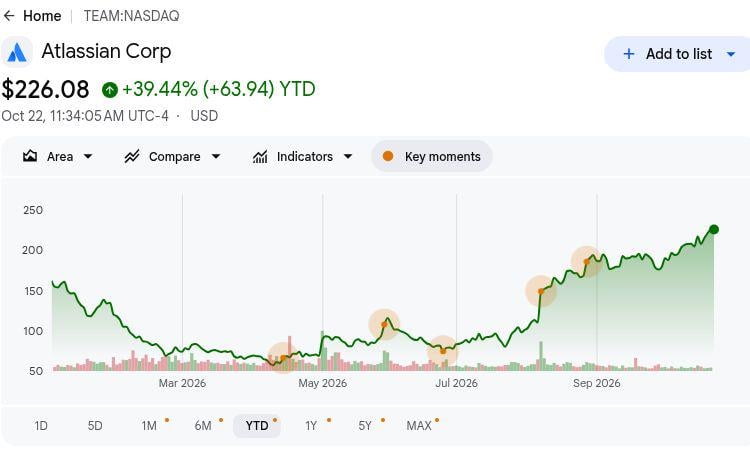
- TEAM closed at $225.51 on October 21, up 39.08% YTD: Shares have gained significantly this year, making the $280 bull scenario dependent on stronger cloud adoption and profitability. Sustained upside will require AI features to generate additional subscription revenue and support long-term earnings growth.
- Q4 revenue increased 28% to $1.766 billion. Cloud revenue reached $1.213 billion, reflecting strong enterprise demand and continued customer migrations. Sustained cloud expansion will be important as Data Center revenue timing influences overall growth.
- Subscription ARR reached $6.606 billion as enterprise demand expanded: Remaining performance obligations totaled $4.817 billion, providing visibility into future revenue. Customer renewals, cloud migrations, and operating efficiency will determine how effectively these commitments translate into earnings and cash flow.
- Rovo and the expanded OpenAI partnership create new AI growth opportunities: Atlassian's October 6 announcement strengthens the integration of AI capabilities across its enterprise collaboration platform. Broader Rovo adoption and paid AI features could support larger subscriptions and deeper customer engagement.
- Quarterly free cash flow reached $475 million: Atlassian held $1.240 billion in cash and generated $1.319 billion in full-year free cash flow. Strong cash generation supports AI development and enterprise expansion, while improving subscription profitability will be important to long-term shareholder returns.
What Is Atlassian (TEAM)?
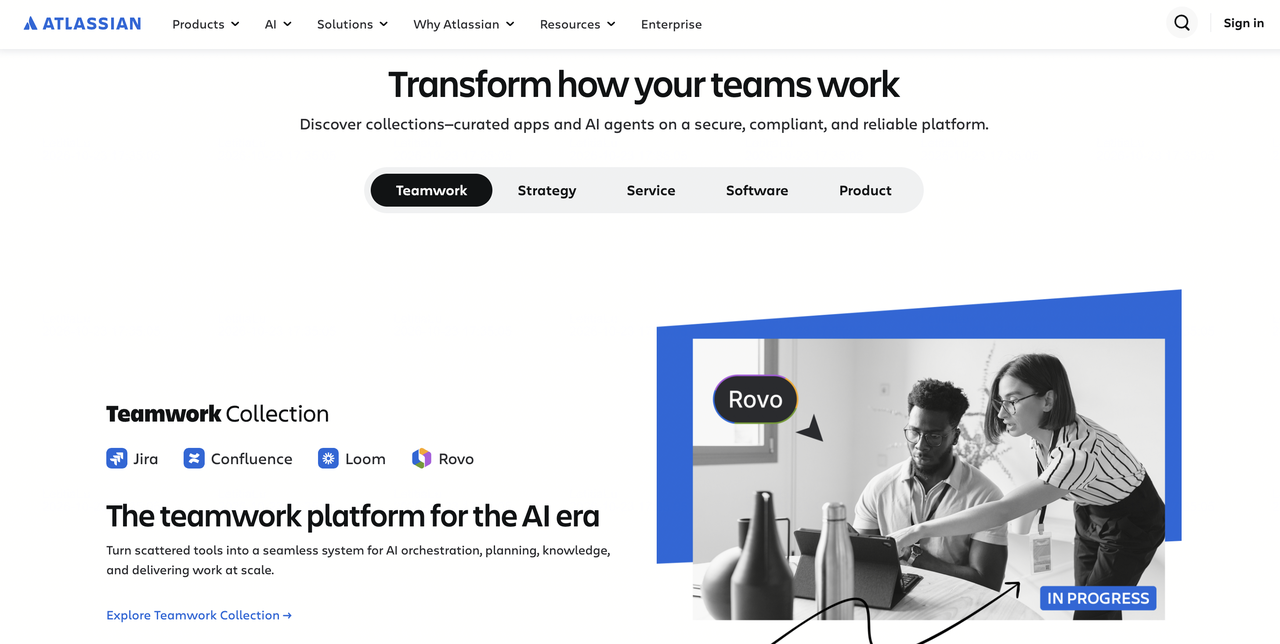
Atlassian is an enterprise software company that helps organizations plan work, build software, manage knowledge and deliver internal services. Its cloud-based operating model connects development, IT and business teams through shared workflows and information. Jira, Confluence, Loom and Jira Service Management serve applications ranging from project tracking to employee support and asynchronous collaboration. The company generates revenue through subscriptions, Data Center licenses and marketplace-related services, with more than 350,000 customers illustrating its broad business reach.
Atlassian’s growth strategy focuses on cloud migration, enterprise platform expansion, and AI-assisted teamwork. In October 2026, the company expanded its partnership with OpenAI to connect frontier models with the Teamwork Graph and Rovo across enterprise workflows. The company is also extending service management and governance capabilities through Isolated Cloud, AI administrative controls and industry-specific compliance features. With subscription ARR reaching $6.606 billion at June 30, these initiatives aim to strengthen recurring revenue while translating a large customer base into more valuable, profitable subscriptions.
Atlassian (TEAM) Q4 FY2026 Earnings Overview: Cloud Growth Fuels EPS Recovery Despite Slower Outlook
Atlassian reported Q4 FY2026 revenue of $1.766 billion, up 28% year over year, driven by cloud sales of $1.213 billion and stronger enterprise commitments. GAAP operating income reached $211 million, while adjusted operating margin rose to 36% and diluted EPS returned to a $0.55 profit, highlighting improved operating leverage. With $4.817 billion in remaining performance obligations and a 13% fiscal 2027 revenue growth outlook, future earnings depend on cloud migration, subscription expansion and disciplined AI spending.
|
Financial Metric |
Guidance / Consensus |
Reported / Actual |
Surprise |
|
Revenue |
$1.384B Q4 FY2025 |
$1.766B |
Improved. Up 28% YoY. |
|
Cloud revenue |
$927.7M Q4 FY2025 |
$1.213B |
Expanded. Up 31% YoY. |
|
Subscription ARR |
$5.382B June 2025 |
$6.606B |
Expanded. Up 23% YoY. |
|
Remaining performance obligations |
Prior-year comparison |
$4.817B |
Expanded. Up 44% YoY. |
|
GAAP operating margin |
−2% Q4 FY2025 |
12% |
Improved. Up 14 points. |
|
Non-GAAP operating margin |
24% Q4 FY2025 |
36% |
Improved. Up 12 points. |
|
GAAP diluted EPS |
−$0.09 Q4 FY2025 |
$0.55 |
Improved. Returned to profit. |
|
Q1 FY2027 revenue guidance |
New forward guidance |
1.705B–1.715B |
Outlook. Next-quarter revenue range. |
- Q4 revenue increased 28% to $1.766 billion. Cloud sales reached $1.213 billion, reflecting stronger subscription demand and migration activity across enterprise customers. Sustained cloud adoption and broader platform expansion will be important to maintaining earnings momentum.
- Cloud revenue rose 31% to $1.213 billion. Enterprise subscription demand and migration activity drove performance across Atlassian’s collaboration and service-management applications. Continued cloud adoption and paid platform expansion could support earnings, although infrastructure spending and AI delivery costs influence profitability.
- GAAP diluted EPS reached $0.55 as profitability improved. Operating margin increased to 12%, while non-GAAP operating margin reached 36% compared with 24% last year. Stronger subscription revenue supported profitability, but delivery efficiency will be important as the revenue mix shifts further toward cloud.
- Subscription ARR reached $6.606 billion at June 30. Annualized recurring subscriptions increased 23%, supporting a wider base of cloud and Data Center commitments. Expanding enterprise adoption supports recurring revenue, while returns depend on retention and profitable migration into the cloud platform.
- Q1 FY2027 revenue guidance reached 1.705billion–1.715 billion. The outlook includes 28.5% cloud growth, with delivery depending on enterprise migrations and customer expansion. Converting commitments into subscriptions, controlling delivery costs, and maintaining renewals will be important to future earnings growth.
Atlassian (TEAM) 2026 Investment Outlook: $280 Bull Case vs. $180 Bear Case
Atlassian’s 2026 outlook depends on whether stronger cloud adoption can sustain recurring earnings through its Data Center transition. Q4 cloud revenue grew 31% and profitability improved, while fiscal 2027 guidance points to lower total growth and normalized margins. The following editorial scenarios test how subscriptions, Rovo adoption and delivery economics could shape returns through year-end.
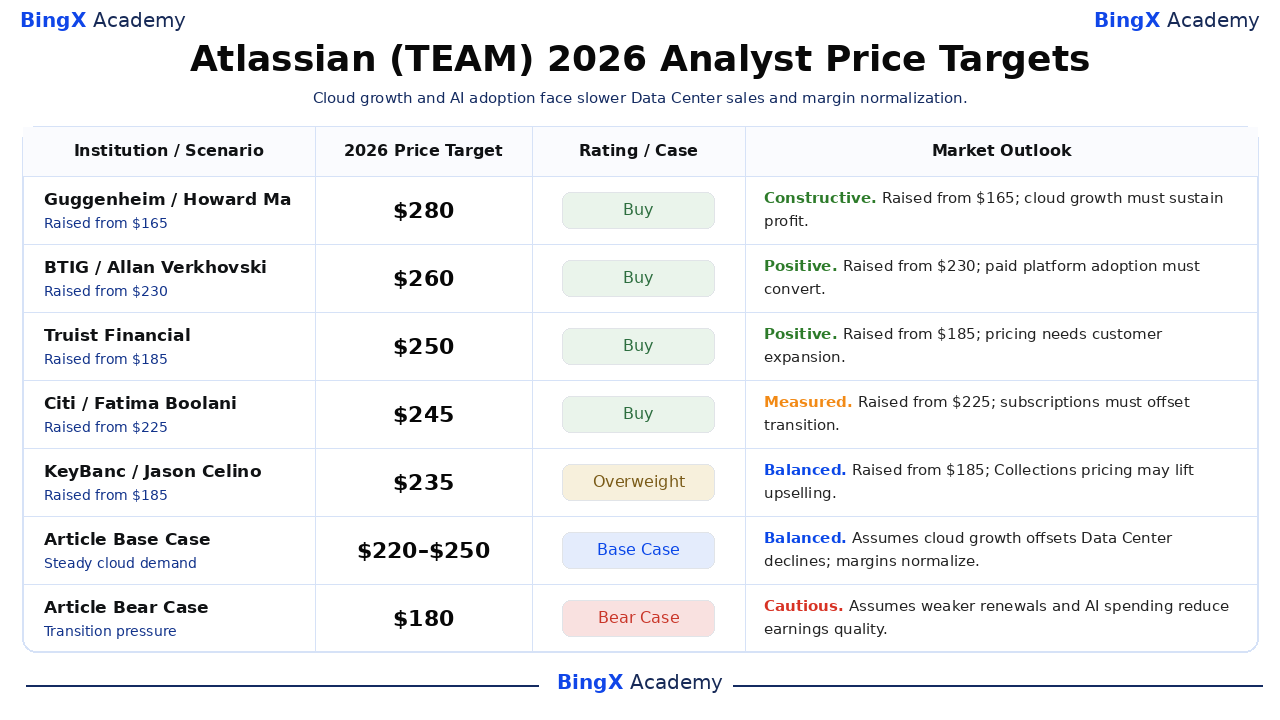
The Bull Case: Cloud Growth and Rovo Adoption Push TEAM Toward $280
Faster paid cloud expansion would increase recurring profit while enterprise AI deployments make the collaboration platform more valuable to customers. Q4 cloud revenue reached $1.213 billion, up 31%, and subscription ARR increased 23%. Broader adoption of Collections and Rovo could deepen spending within existing accounts without relying solely on additional licensed users.
The $280 scenario would gain support if cloud growth exceeds the 28.5% Q1 outlook and revenue surpasses $1.715 billion. Sustaining positive GAAP margins would connect broader platform adoption with stronger earnings rather than simply higher usage.
The Base Case: Steady Cloud Subscriptions Keep TEAM Between $220 and $250
Recurring cloud subscriptions could keep operating earnings positive even as Data Center sales decline and AI spending absorbs part of the growth benefit. Atlassian guided fiscal 2027 cloud growth of 25.5% against a 17% Data Center decline. That combination supports expansion, but total revenue growth of 13% would remain below the latest quarterly pace.
A $220 to $250 range would fit guided cloud growth, continued renewals and a positive GAAP operating margin. Better paid adoption could support the upper end, while migration delays or higher delivery costs could limit further valuation expansion.
The Bear Case: Slower Migrations and Higher Costs Pull TEAM Toward $180
Slower cloud migrations would expose Atlassian more fully to declining Data Center revenue while weakening the absorption of AI and infrastructure costs. Management’s fiscal 2027 GAAP operating margin outlook was 4.5%, below Q4’s 12%. If enterprise renewals weaken or usage grows without paid expansion, the company could lose earnings momentum despite its recurring subscription base.
The $180 scenario would become more likely if cloud growth falls below guidance alongside weaker subscription ARR expansion. Rovo and newer enterprise products would then need to contribute more simply to stabilize profitability, leaving less support for a higher multiple.
TEAM Stock Price Forecasts for 2026 By Wall Street Analysts
These named, dated targets refer to Atlassian’s Nasdaq-listed shares and generally cover approximately 12 months, extending beyond calendar 2026. The selected $235 to $280 range reflects different assessments of cloud growth, pricing and enterprise adoption. The final two rows are separate editorial year-end scenarios; accompanying business interpretations are this article’s analysis.
|
Institution / Scenario |
2026 Price Target |
Rating / Case |
Market Outlook |
|
Guggenheim |
$280 |
Buy |
Constructive. October 19, 2026: Raised from $165 to $280; retained Buy. Editorial view: Cloud expansion and enterprise adoption must sustain earnings after the share-price recovery. |
|
BTIG |
$260 |
Buy |
Positive. October 20, 2026: Raised from $230 to $260; retained Buy. Editorial view: Broader platform adoption must translate into repeatable subscription profit and cash. |
|
Truist Financial |
$250 |
Buy |
Positive. October 21, 2026: Raised from $185 to $250; retained Buy. Editorial view: Higher pricing needs durable customer expansion rather than a temporary licensing benefit. |
|
Citi |
$245 |
Buy |
Measured. October 20, 2026: Raised from $225 to $245; retained Buy. Editorial view: Recurring demand must offset slower Data Center sales and lower guided margins. |
|
KeyBanc |
$235 |
Overweight |
Balanced. October 19, 2026: Raised from $185 to $235; retained Overweight. Editorial view: Usage pricing could support Collections upselling, while delayed migrations create timing risk. |
|
Article Base Case |
220–250 |
Base Case |
Balanced. Assumes guided cloud expansion offsets Data Center declines while margins normalize through December 2026. |
|
Article Bear Case |
$180 |
Bear Case |
Cautious. Assumes weaker migrations and AI costs reduce earnings quality through December 2026. |
How to Buy Atlassian (TEAM) Stock on BingX
Buy and hold Atlassian shares through BingX Stocks Trading using USDT or USDC, subject to listing and account eligibility. Atlassian offers exposure to cloud collaboration, software development, knowledge management and enterprise AI workflows. Eligible users can size holdings according to their investment goals without using leverage or paying perpetual funding fees.
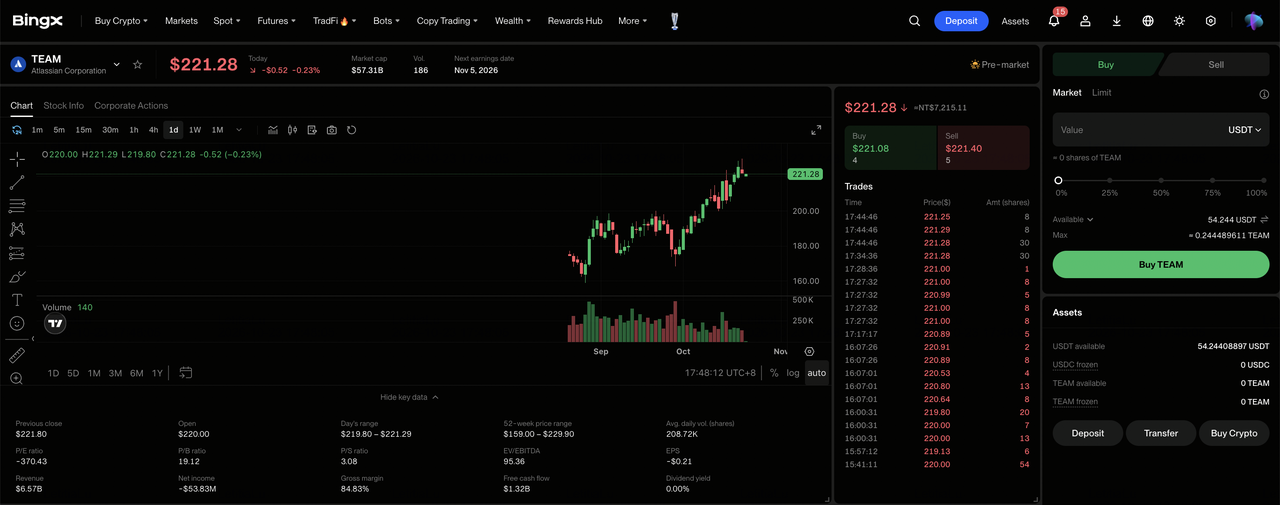
Step 1: Access BingX Stocks Trading. Sign up or log in to BingX, complete the required identity verification, and navigate to “TradFi > Stocks”. Accept the Stock Trading Risk Disclosure if accessing the product for the first time.
Step 2: Prepare USDT or USDC. Ensure your Spot Account has sufficient funds for the purchase. Transfer USDT or USDC from your Fund Account or Wealth Account if needed. Review the selected stock’s minimum order amount and fractional eligibility before choosing the investment size.
Step 3: Select Atlassian (TEAM). Open the Stocks market, search for Atlassian (TEAM), and confirm that the Class A share is available to your account. Review the company identity, current share price, trading session and available order types.
Step 4: Buy Atlassian Shares. Select “Buy”, enter an allowed investment amount or share quantity, and choose a supported market or limit order. Market orders use available prices during supported sessions, while limit orders require the specified price or better and sufficient liquidity to execute.
Step 5: Review and Manage Your Holdings. Open “Stocks > Positions” to monitor your TEAM shares and unrealized profit or loss. Use All Orders to review transactions or sell shares when needed. T+1 settlement generally affects when sale proceeds become withdrawable, rather than when purchased shares can be sold.
Top 5 Risks to Watch for Atlassian Investors in 2026
Atlassian’s subscription base, enterprise platform, and expanding enterprise AI capabilities support its earnings outlook. However, cloud demand, delivery costs, migration timing, and monetization requirements could pressure profitability and shareholder returns.
- Weaker cloud demand could pressure revenue: Q4 cloud revenue reached $1.213 billion, supported by enterprise adoption and migration activity. Lower subscription expansion or renewal volumes could reduce earnings and operating returns as existing contracts come up for renewal.
- Rising delivery costs could constrain margins: Fiscal 2027 GAAP operating margin guidance was 4.5%, compared with 12% in Q4. Higher infrastructure and AI costs could weaken profitability if cloud revenue and enterprise subscriptions grow more slowly.
- Enterprise migration delays could limit revenue growth: Remaining performance obligations reached $4.817 billion, but recognition depends on contractual delivery and subscription timing. Delayed migrations, customer deployments, or enterprise expansion could reduce future revenue visibility.
- AI investment could weaken shareholder returns: Atlassian expanded Rovo and enterprise governance capabilities through its broader collaboration platform. Adoption problems or higher delivery costs could limit incremental subscription profit and reduce shareholder value despite use of AI features.
- Weaker subscription growth could pressure valuation: Atlassian’s fiscal 2027 ARR growth outlook reached 18%, supported by cloud expansion. Slower migrations, weaker renewals, or rising delivery costs could reduce earnings and trigger share-price declines.
Final Thoughts: Should You Invest in Atlassian in 2026?
Atlassian’s $6.606 billion in subscription ARR and $475 million in quarterly free cash flow demonstrate recurring scale and meaningful cash generation. Cloud migration, enterprise Collections and Rovo provide opportunities to deepen customer spending while reducing dependence on legacy licenses. Sustaining that progress will depend on subscription retention, profitable AI adoption and continued operating discipline.
The $280 bull case assumes faster cloud expansion, stronger paid Rovo adoption and durable GAAP profitability. The $220 to $250 base case reflects guided growth, while the $180 bear case accounts for weaker migrations and higher costs. With TEAM closing at $225.51 on October 21, investors should watch whether enterprise adoption produces sustainable earnings per share.
Risk Reminder: Atlassian’s recurring subscriptions do not eliminate investment risk. Slower cloud adoption, rising AI costs, or migration delays could weaken earnings and shareholder returns. Investors should assess valuation, subscription performance, and their risk tolerance before buying TEAM shares.
Related Reading
- What Is BingX Stocks Trading? A Beginner's Guide to Trading U.S. Stocks and ETFs With Crypto
- Salesforce (CRM) Price Prediction 2026: Can Agentforce-Led Growth Push CRM Toward $330?
- Adobe (ADBE) Price Prediction 2026: Can AI Monetization Push ADBE Toward $350?
- Figma (FIG) Price Prediction 2026: $36.00 AI Launchpad or Overvalued Post-IPO Hangover Trap?
- CrowdStrike (CRWD) Price Prediction 2026: Can AI Security and Falcon Flex Push CRWD Toward $280?
- Microsoft (MSFT) Stock Outlook for 2026: Can Azure AI and Copilot Growth Drive MSFT Stock to $550+?
