
For advanced cryptocurrency investors and developers in Taiwan, executing automated Bitcoin (BTC) trading through APIs is an important step in upgrading strategies from manual operations to systematic execution. Whether it'sBitcoin funding rate arbitrage, grid trading, trend following, or quantitative backtesting, APIs allow trading logic to run continuously without constant monitoring. However, different platforms have significant variations in API specifications, including rate limits, market data update stability, documentation completeness, and fee structures, all of which directly affect strategy execution efficiency and long-term costs.
For Taiwanese developers, several key aspects are particularly important when choosing a BTC API trading platform. First, the completeness of documentation and examples directly affects development efficiency - whether clear Traditional Chinese instructions and implementation examples are provided often determines the learning curve; second, the stability of real-time market data feeds is crucial for whether strategies can execute accurately during market volatility; additionally, whether the futures API fee structure favors limit orders also affects the overall returns of high-frequency and arbitrage strategies.
This article will start from the practical usage scenarios of Taiwanese BTC API developers and automated traders, systematically compare the API specifications, fee structures, and system stability of mainstream platforms, and explain how to use the BingX API to build Bitcoin automated trading processes, helping to choose more suitable API execution platforms for different strategy requirements.
Key Takeaways
- The main cost of BTC API automated trading comes from trading fees. BingX's futures maker fee is 0.02% and taker fee is 0.05%, which is among the lower levels of mainstream platforms, and doesn't require high trading volume or VIP status - regular investors can use it directly.
- Whether automated trading can operate stably largely depends on the platform's system stability and market data update speed. Choosing a platform that canprovide real-time BTC prices and still execute orders smoothly during market volatility is key to long-term strategy operation.
- Whether API documentation and operation instructions are clear affects the learning curve. Platforms that provide comprehensive tutorials and Traditional Chinese instructions make it easier for users without engineering backgrounds to start trying automated trading.
- Each platform has frequency limits for API usage. If requests are too frequent, it may cause order delays or failures. When designing strategies, it's necessary to pay attention to platform limitations to avoid affecting actual trading performance.
- In terms of asset security, it's recommended to enable IP whitelists and disable withdrawal permissions to prevent account abuse. Strategy profits can be withdrawn through USDT and converted to Taiwan dollars, maintaining clear and compliant fund flow methods.
When Should You Use BTC API Automated Trading?
Not everyone needs to use APIs for trading, but when your operations start to become "need stable execution and repetitive execution" and you have basic programming abilities (such as using Python or understanding simple logic), API automation becomes very valuable. Here are several common scenarios where BTC APIs are used:
- Need long-term running strategies (don't want to watch screens constantly): If your strategy needs continuous market observation, such as judging market conditions every few minutes or automatically entering and exiting at specific prices, using APIs allows programs to run continuously and execute trades automatically without long hours of screen watching, especially suitable for investors who cannot monitor markets full-time.
- Execute fixed-logic trading strategies (such as grid or funding rate arbitrage): When trading rules are clear and repeatable, such as placing orders at fixed price intervals or establishing hedged positions when funding rates are positive, APIs can stably execute these conditions, avoiding strategy effectiveness being affected by emotions or manual operation delays.
- Need faster response to market changes: During rapid market volatility, manual order placement often experiences delays or misses optimal prices, while APIs can trigger trades immediately when conditions are met, improving execution efficiency, which is particularly important for scalping strategies or arbitrage strategies.
- Simultaneously manage multiple trading conditions or positions: When you're running multiple strategies or setting different entry and exit conditions simultaneously, manual management is prone to errors. APIs allow different strategies to operate separately, improving overall management efficiency and execution consistency.
- Want to test or optimize your trading strategies: APIs allow you to convert trading logic into programs, observe strategy performance over long periods and continuously adjust parameters. Even starting with simple conditional judgments, you can gradually build more complete automated trading systems.
How to Choose a BTC API Trading Platform: 5 Key Factors for Taiwan Users
API automated trading has completely different platform requirements compared to manual trading. The following five aspects are most critical for Taiwanese users and should be understood before selection even without programming development backgrounds.
- Whether usage frequency limits are reasonable (Rate Limit): Platforms usually limit how many requests your program can send per second or minute. Exceeding this may result in suspension or rejection, causing strategies to miss trading opportunities. For general users, if strategies only judge market conditions a few times per minute, most platforms are sufficient; only high-frequency strategies need special attention to these limits.
- Whether documentation and tutorials are easy to understand (Traditional Chinese support is important): The clarity of documentation directly affects whether you can successfully get your first strategy running. Platforms with Traditional Chinese instructions, tutorial articles, or example programs can significantly lower entry barriers, which is particularly important for Taiwanese users.
- Whether fees are suitable for long-term use (especially limit orders): Automated trading usually makes heavy use of limit orders (maker orders) because of lower fees. Over time, the difference between 0.02% and 0.05% accumulates into significant costs, with greater impact on high-volume users.
- Whether market data updates are real-time and stable (WebSocket): Automated strategies need continuous receipt of latest prices to react immediately when conditions appear. If market data updates are delayed or unstable, strategies may "fail to act when they should," affecting overall performance.
- Whether ready-to-use tools are available (SDK / common framework support): Most platforms provide simplified tools that allow users to avoid starting from scratch. Support for Python or common trading frameworks can help general users more quickly build and test their first automated strategy.
Best BTC API Trading Platforms in Taiwan (2026)
Based on the five evaluation aspects above, here's a compilation of mainstream platforms commonly used by Taiwanese BTC API automated traders. Different platforms have varying differences in fees, operation barriers, and documentation support. It's recommended to choose the most suitable tool based on your strategy requirements and familiarity level.
1. BingX
BingX performs well in fees, API support, and overall user experience, making it a common choice among current Taiwanese BTC API automated traders. Futures maker fee is 0.02% and taker fee is 0.05%, which is in the lower fee range among mainstream platforms and doesn't require reaching specific VIP levels to apply, making it more friendly for individual developers or medium-volume trading users. The fee structure is clear and suitable for automated trading scenarios that need long-term strategy operation with accumulated trading frequency.
In practical applications, BingX API can be used for various automated trading needs, including automatic order placement, position queries, price monitoring, conditional order setup, and executing funding rate arbitrage or grid trading strategies. REST API can be used for trading and data queries, while WebSocket provides continuous real-time market data updates, allowing strategies to react quickly to price changes. For users who already have clear trading logic, they can convert originally manual operation processes to automated execution, improving efficiency and consistency.
In terms of development and user experience, BingX provides comprehensive API documentation and example programs, supporting Python and other common languages, making it convenient for users to quickly build and test strategies. The documentation structure is clear, and examples help reduce initial understanding costs, making it relatively friendly even for users new to APIs. After trading completion, funds can be withdrawn through USDT and transferred to Taiwan local exchanges (such as MAX or BitoPro) to convert back to Taiwan dollars. The overall capital flow path is clear and fits Taiwanese user habits.
Extended reading: Complete Comparison of Cryptocurrency Fiat On/Off Ramps in Taiwan: Which Platform Has the Cheapest Deposits and Fastest Withdrawals? (2026)
- Low futures fees: Maker fee 0.02%, taker fee 0.05%, API automated trading costs have clear advantages among mainstream platforms
- Traditional Chinese API documentation: Provides Traditional Chinese instructions and code examples, lowest entry barrier for Taiwanese developers
- Official Python SDK: python-bingx open source maintenance, GitHub provides complete examples for quick integration
- Stable WebSocket: Supports Ticker, K-line, OrderBook push, complete Ping/Pong heartbeat mechanism
- Taiwan compliant withdrawal: USDT TRC-20 withdrawal fee less than $1, can be converted to Taiwan dollars through MAX or BitoPro
2. OKX
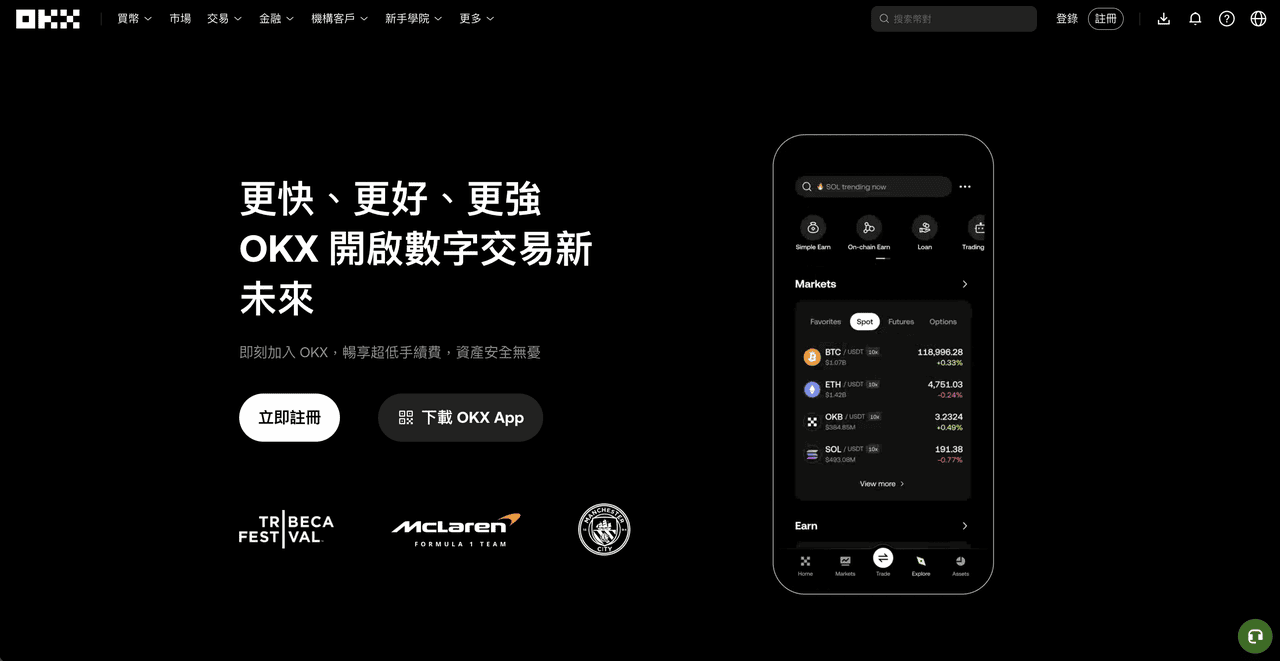
OKX is among the top three global derivatives trading volume exchanges with a mature API ecosystem, and REST and WebSocket documentation completeness is at industry high standards. BTC/USDT perpetual futures maker fee is 0.02%, taker fee is 0.05%, with the same fee structure as BingX. High VIP levels can achieve negative maker rates, providing additional fee advantages for high-frequency quantitative traders. OKX's WebSocket API supports order book depth push (Level 1 and Level 2), with stable latency performance, suitable for quantitative strategies that need real-time order book data. The platform provides Traditional Chinese interface, API documentation has Chinese versions, official maintenance of Python and JavaScript SDKs, and ccxt also fully supports OKX integration. Rate limits are relatively lenient, suitable for medium-frequency automated strategies.
Extended reading: BingX vs OKX Comparison: Which Exchange is Better for Spot and Futures Trading? Complete Fee and Pros/Cons Analysis (2026)
3. Kraken Pro
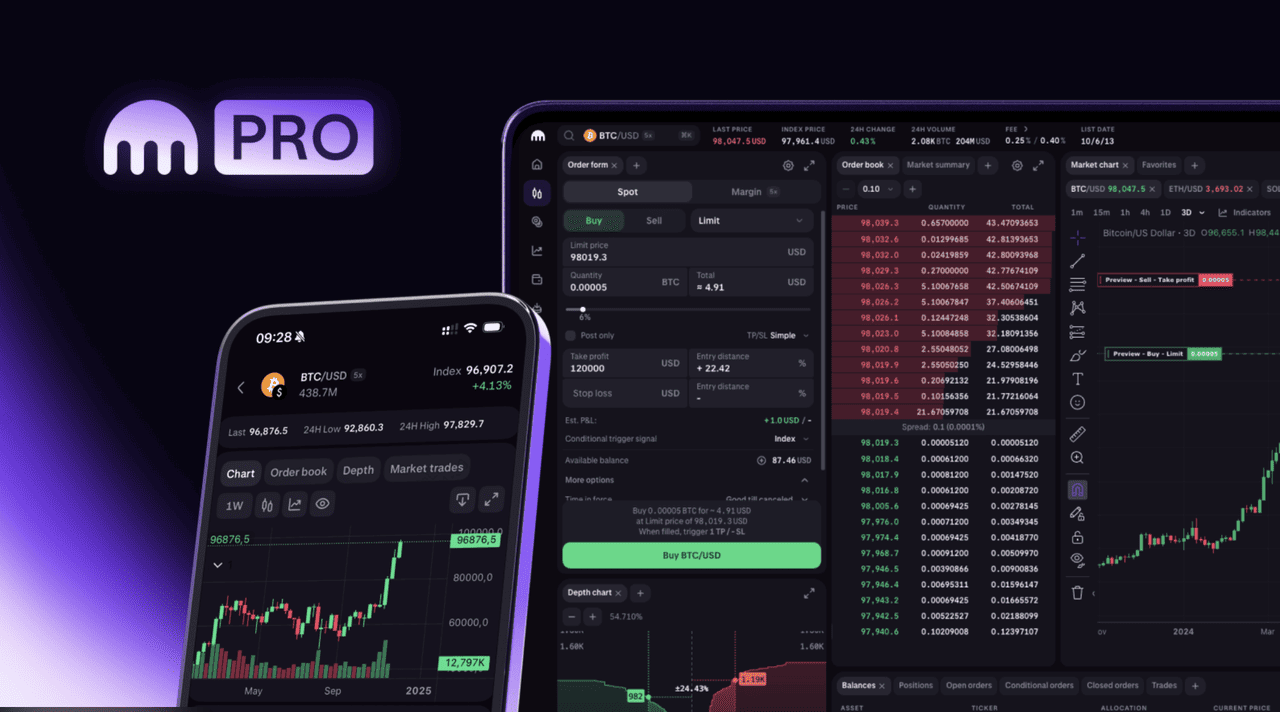
Founded in 2011, Kraken's API documentation is primarily in English and is known for system stability, with extremely few historical API service interruption records, suitable for quantitative strategies with the highest reliability requirements. BTC futures maker fee is 0.02%, taker fee is 0.05%, with competitive rates. Kraken's WebSocket API supports real-time market data push with complete Ping/Pong mechanisms, and has a good reputation among institutional quantitative users. Note that Kraken doesn't provide Chinese API documentation - it's all in English, creating some barriers for Taiwanese developers; rate limits are relatively conservative, not suitable for extremely high-frequency automated strategies. ccxt fully supports Kraken integration.
Extended reading: BingX vs Binance vs Kraken: Which Cryptocurrency Exchange Platform is Best in 2026?
4. Binance
Binance has the world's most comprehensive cryptocurrency API ecosystem, with BTC/USDT perpetual futures order depth ranking first globally. API documentation is detailed and updated timely, with the most active open-source community. Futures maker fee is 0.02%, taker fee is 0.05%, with an additional 10% discount when paying with BNB. Binance's WebSocket API supports multiple subscription types, with rate limits among the most lenient of mainstream platforms, suitable for high-frequency automated strategy execution. Official multi-language SDKs are provided, ccxt support for Binance is most comprehensive, and numerous open-source quantitative frameworks use Binance as the primary testing target. Note that Binance faces regulatory scrutiny in multiple global jurisdictions. Taiwanese developers should confirm the current service terms' applicable scope and pay attention to relevant compliance requirements before use.
Extended reading: BingX vs. Binance Comparison: Which Exchange is Better for Spot and Futures Trading? Complete Fee and Pros/Cons Analysis (2026)
5. Bitget
Bitget has been continuously expanding API features in recent years, providing Traditional Chinese interface with Chinese versions of API documentation. BTC perpetual futures maker fee is 0.02%, taker fee is 0.06%, with taker fees slightly higher than BingX. Holding BGB can enjoy discounts, reducing to about 0.048%. Bitget's WebSocket API supports mainstream BTC/USDT subscription types with acceptable connection stability under normal market conditions. Official Python SDK is provided, and ccxt also supports Bitget integration. Rate limits are at medium levels, suitable for general frequency quantitative strategies.
Extended reading: BingX vs Bitget: Which is Better for Spot and Futures Trading? Complete 2026 Fee and Pros/Cons Comparison
BTC API Platform Comparison in Taiwan (2026): Fees, WebSocket, SDK, and Chinese Support
|
Platform |
Futures Maker Fee |
Futures Taker Fee |
REST Rate Limit |
WebSocket Real-time Market Data |
Official SDK Support |
Traditional Chinese Documentation |
|
BingX |
0.02% |
0.05% |
High |
Ticker / K-line / OrderBook / Account |
Python, JavaScript |
✓ Full Support |
|
OKX |
0.02% |
0.05% |
High |
Ticker / K-line / OrderBook (L1/L2) / Account |
Python, JavaScript |
✓ Supported |
|
Kraken Pro |
0.02% |
0.05% |
Medium |
Ticker / K-line / OrderBook / Account |
Python |
✕ (English only) |
|
Binance |
0.02% (~0.018% with BNB) |
0.05% (~0.045% with BNB) |
Very High |
Ticker / K-line / OrderBook / Account / Advanced Data |
Python, JS, Java, etc. |
✓ Supported |
|
Bitget |
0.02% |
0.06% (~0.048% with BGB) |
Medium |
Ticker / K-line / OrderBook / Account |
Python |
✓ Supported |
Which BTC API Platform Has the Lowest Fees?
In API automated trading, fees accumulate rapidly with trading frequency, with much greater impact on final returns than general manual trading. Especially in high-frequency strategies or arbitrage scenarios, even a 0.01% fee difference can amplify into significant cost disparities over time. Taking monthly API trading volume of about 300,000 USDT as an example, if all executed at market orders, the difference between 0.05% and 0.10% rates could result in hundreds of USDT difference in monthly costs.
Besides taker rates, maker rates and VIP mechanisms are equally crucial. If strategies can execute through limit orders, actual costs can be further reduced; some platforms even provide negative maker rates (Maker Rebate) at high VIP levels, receiving rebates upon execution, with even greater impact on quantitative trading or market-making strategies. Therefore, when choosing platforms, you shouldn't just look at "general rates," but should also evaluate VIP conditions and actually achievable rate ranges.
BingX adopts a VIP mechanism based on monthly trading volume, which can gradually reduce rates without needing to hold platform tokens. Under high-level conditions, maker rates can be further reduced to zero rates, providing cost advantages for long-term automated strategies or market-making traders; OKX and Binance provide negative maker rates at high VIP levels, but usually require reaching higher trading volumes or additional holding conditions. Below is a comparison of mainstream platform fee structures and actual cost estimates for quick comparison.
Extended reading: Which Platform Has the Lowest Fees for Buying Bitcoin in Taiwan? BTC Price Difference, Fee and Liquidity Comparison (2026)
BTC API Fees and Maker Rate Comparison
|
Platform |
Futures Maker Fee (Standard) |
Futures Taker Fee (Standard) |
Maker Rebate Mechanism |
VIP Upgrade Conditions |
Monthly 300K USDT Trading Volume Fee Estimate |
|
BingX |
0.02% (High levels can approach 0) |
0.05% |
✓ High levels can achieve zero rates |
Monthly trading volume accumulation |
~150 USDT (all taker) |
|
OKX |
0.02% |
0.05% |
✓ High levels can achieve negative rates |
Trading volume + OKB holdings |
~150 USDT (all taker) |
|
Kraken Pro |
0.02% |
0.05% |
Decreases by level |
Monthly trading volume accumulation |
~150 USDT (all taker) |
|
Binance |
0.02% (~0.018% with BNB) |
0.05% (~0.045% with BNB) |
✓ High levels can achieve negative rates |
Trading volume + BNB holdings |
~135 USDT (with BNB discount) |
|
Bitget |
0.02% |
0.06% (~0.048% with BGB) |
Decreases by level |
Trading volume + BGB holdings |
~180 USDT (all taker) |
Note: Fee estimates are calculated using all market taker orders. Actual fees will be lower with limit maker order proportions. Each platform's fee policies may change at any time. Please refer to each platform's official fee page current display before development.
How to Choose a Bitcoin WebSocket API: Stability and Connectivity
In API automated trading, WebSocket latency and stability often have more direct impact on strategy performance than fee differences. BTC markets operate 24/7, and when prices fluctuate rapidly in short periods, the speed and stability of real-time market data push determines whether strategies can trigger trading logic at optimal timing.
For strategies dependent on order books or short-term arbitrage, even millisecond-level latency differences can affect execution prices and execution quality. For Taiwanese developers (UTC+8), it's more important to actually test the connection stability of each platform in local network environments rather than just looking at official technical specifications.
From functionality support perspective, BingX provides comprehensive BTC/USDT WebSocket subscriptions, including Ticker, K-line, multi-level order books, and account push, using clear Ping/Pong heartbeat mechanisms; OKX supports more detailed L2 order book incremental updates, suitable for strategies requiring depth data; Binance provides Combined Streams, allowing integration of multiple data sources in a single connection, reducing connection costs.
BTC WebSocket Latency and Stability Comparison
|
Platform |
WebSocket Subscription Types |
Order Book Data Updates |
Heartbeat Mechanism (Ping) |
Auto Reconnect |
Taiwan Actual Stability |
|
BingX |
Ticker / K-line / OrderBook / Account |
✓ Incremental updates |
~Every 20 seconds |
Self-implementation required |
High |
|
OKX |
Ticker / K-line / OrderBook (L1/L2) / Account |
✓ L2 incremental updates |
~Every 30 seconds |
Self-implementation required |
High |
|
Kraken Pro |
Ticker / K-line / OrderBook / Account |
✓ Incremental updates |
Auto heartbeat |
Self-implementation required |
Medium-High |
|
Binance |
Ticker / K-line / OrderBook / Account / Combined Streams |
✓ Incremental + Snapshot |
~Every 3 minutes |
Self-implementation required |
High |
|
Bitget |
Ticker / K-line / OrderBook / Account |
✓ Incremental updates |
~Every 30 seconds |
Self-implementation required |
Medium-High |
How to Choose a BTC API Framework: Python and JavaScript SDK Options
For users wanting to start BTC API automated trading, choosing the right framework or SDK is the first step in implementing strategies. The core value of these tools lies in simplifying originally complex API integration processes, allowing users to complete order placement, balance queries, or market data subscriptions with less code, without implementing all underlying logic from scratch.
Current common choices can be roughly divided into three categories: multi-exchange integration frameworks (like ccxt), exchange official SDKs (like python-bingx), and advanced automation tools or self-development. ccxt is suitable for users who hope to expand strategies across platforms in the future, supporting over a hundred exchanges with rich community resources; python-bingx is more suitable for users focusing on the BingX ecosystem, with more direct integration and support for platform-specific features (like funding rate queries and BingX AI data). For users with certain development capabilities, implementing REST and WebSocket APIs themselves can achieve maximum flexibility, but with relatively higher development costs.
Overall, if the goal is to quickly launch the first strategy, ccxt or python-bingx is sufficient for most needs; when strategy complexity increases or more detailed control is needed, then considering advanced tools or building custom architectures would be more suitable.
BTC API Framework and SDK Comparison
|
Framework / SDK |
Language Support |
BingX Support |
Multi-Exchange Support |
Community & Documentation |
Suitable For |
|
ccxt |
Python, JS, PHP |
✓ Supported |
✓ 100+ exchanges |
Very High |
Beginner~Advanced (cross-platform) |
|
python-bingx (Official) |
Python |
✓ Native support |
✗ BingX only |
Medium-High (officially maintained) |
Beginner~Intermediate (BingX focus) |
|
OKX Python SDK |
Python |
✗ |
✗ OKX only |
High |
OKX users |
|
Hummingbot |
Python |
Version dependent |
✓ Multi-exchange |
High |
Strategy traders with programming background |
|
Self-implementation (REST + WebSocket) |
Any language |
✓ Based on documentation |
✗ |
None |
Advanced developers |
How to Access BingX API Docs and Developer Resources
Before starting to use BingX API, it's recommended to first quickly browse the official documentation to understand the supported trading, market data, and account features, and establish basic usage concepts.
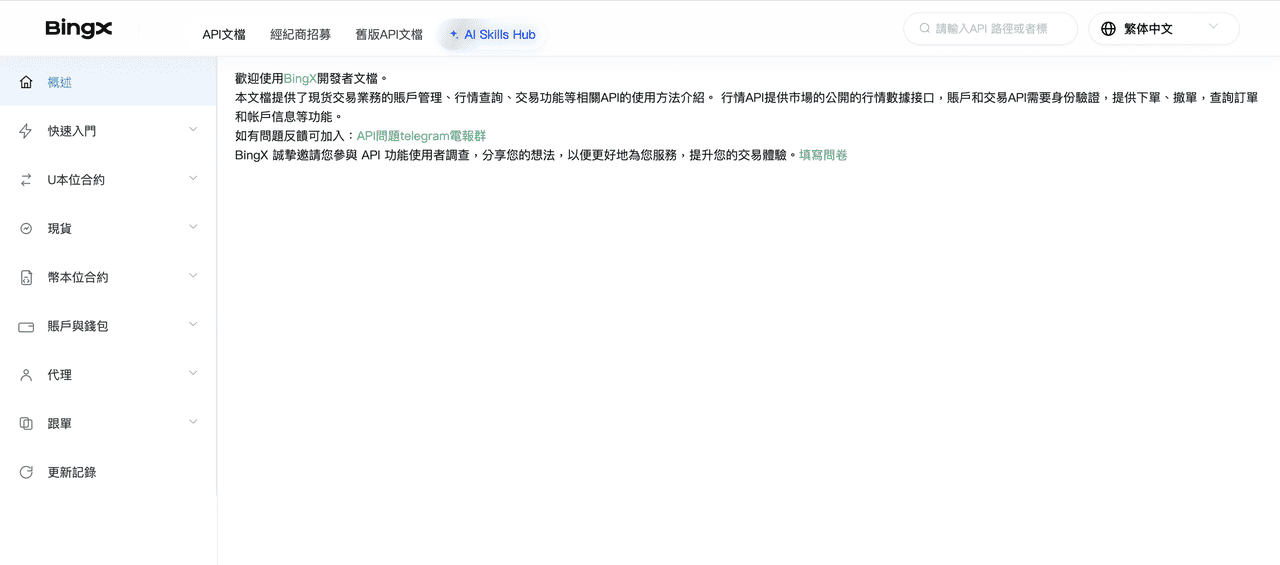
- Enter official API documentation and confirm version: BingX API Documentation can be accessed from the official website or by directly searching "BingX API docs". The documentation distinguishes between spot and perpetual futures categories and is continuously updated. It's recommended to first confirm whether you're using Production or Testnet documentation to avoid using wrong endpoints during development.
- Understand core API modules (Trading / Market Data / Account): Documentation is usually divided into three main sections: Trading API (order placement, closing, cancellation), Market Data API (Ticker, K-line, OrderBook depth), and Account API (balance, positions, funding rates). Most automated strategies only use a few core functions from these, so confirm the needed modules first without needing to dive deep into everything at once.
- Check real-time data and execution methods (REST vs WebSocket): BingX provides both REST API and WebSocket methods. REST is suitable for trading and data queries, while WebSocket is used for continuous real-time market data reception (like BTC/USDT price changes). If strategies need real-time market reaction (such as arbitrage or scalping), both are usually used simultaneously.
- Reference SDK and examples for quick verification: Official provides SDKs and example programs in Python and other languages, which can be used to quickly test basic functions like price queries or simple order placement. It's recommended to first verify processes with small amounts or test environments, then gradually expand to full strategies, effectively reducing development and execution risks.
5 Key Factors Before Using BTC API Automated Trading
- API key security settings take priority over everything: API keys are essentially account operation authorizations. Once leaked, they can be used for trading or even cause losses. It's recommended to only enable necessary permissions (like trading) and disable withdrawal permissions while setting IP whitelists. If key leakage is suspected (such as accidental sharing or uploading to public platforms), immediately revoke and recreate new ones.
- Automated strategies need risk control mechanisms: APIs allow strategies to run for long periods, but this also means risks accumulate without monitoring. It's recommended to set daily maximum loss limits, single trade limits, and position controls, and regularly check strategy status to avoid unexpected losses during extreme market conditions.
- Avoid triggering rate limits: Platforms set upper limits on API request frequencies. Exceeding these may result in request rejections, causing missed orders or strategy failures. It's recommended to first test strategy operation frequency on Testnet, then deploy to production after confirming stability.
- Maintain complete trading records for management and tax purposes: Automated trading generates large volumes of execution records. It's recommended to regularly export and organize these (such as execution history and fund flows), not only convenient for backtesting and strategy optimization but also important documentation for Taiwan tax filing.
- Monitor API updates and version changes: Platforms may periodically adjust API structures or discontinue old endpoints. It's recommended to follow official announcements or Telegram channels, and confirm whether strategies need adjustments when versions update, avoiding program interruptions due to API changes.
Conclusion: Why Use the BingX API for Bitcoin Trading
For Taiwanese users, the key to choosing BTC API platforms isn't just fees or technical specifications, but whether strategies can be successfully implemented from concept to actual running programs. BingX achieves relative balance between documentation support and usage barriers, providing comprehensive Traditional Chinese API instructions, official Python SDK, and example programs, giving users clear reference and implementation paths when building their first automated strategy. Futures maker fee 0.02%, taker fee 0.05% applicable without reaching high trading volumes, also providing controllable costs during initial testing phases.
In terms of scalability and practical usage, BingX already supports ccxt, making it convenient for integration in multi-exchange architectures; BingX AI can serve as auxiliary reference before strategy launch, providing additional market observation perspectives; funds can be withdrawn through USDT TRC-20 to Taiwan local exchanges for conversion back to Taiwan dollars, with clear withdrawal processes meeting practical operational needs. Overall, from strategy building, execution to fund recovery, the process is relatively coherent.
Regardless of which platform is ultimately chosen, API key permission settings, risk control mechanisms, and strategy verification processes remain core to long-term stable operation. For Taiwanese users hoping to systematically run BTC strategies continuously, BingX's overall balance in Traditional Chinese support, fee structure, and fund pathways makes it a relatively easy entry point.
Related Reading
- Taiwan Bitcoin Scalping Trading Platform Recommendations: Complete Comparison of Fees and Technical Tools (2026)
- How to Do Bitcoin Arbitrage Trading in Taiwan? 4 Strategy Comparisons and Complete BingX Tutorial (2026)
- Which Exchange in Taiwan is Best for Large Volume Bitcoin Trading? Complete Comparison of Platform Fees and Liquidity Recommendations (2026)
- 2026 Cryptocurrency Exchange Price API and Data Tool Recommendations: Top 5 Developer Platforms
- Complete Comparison of Taiwan Cryptocurrency Futures Trading Platforms (2026): Fee, Liquidity and Security Comparison
