
The asset tokenization market has definitively moved past the proof-of-concept stage. According to data from RWA Monitor, Brazil wrapped up January 2025 with over R$ 1.5 billion in cumulative tokenized issuances, marking an explosive 1,134% year-over-year growth. On a global scale, a joint report published by RedStone, Gauntlet, and RWA.xyz in June 2025 tracked $24 billion in Real-World Assets (RWAs) on-chain—a massive 380% surge compared to three years prior. For crypto investors, this is no longer niche news: it is an emerging asset class reshaping centralized exchanges, DeFi protocols, and institutional funds alike.
Quick Take: Asset tokenization (RWA) is the process of converting a physical or traditional financial asset into a digital token minted on a blockchain network. To navigate this ecosystem: (1) verify the underlying asset and its custodian; (2) cross-check Proof of Reserves (PoR) audits and regulatory compliance; (3) select the right platform for your trading profile, whether spot or derivatives; and (4) assess secondary market liquidity before allocating capital.
What Are Real-World Assets (RWA)?
RWA stands for Real-World Asset. The core concept is straightforward: taking an off-chain asset and creating a digital representation of that asset in the form of a token. This underlying asset can be anything from commercial real estate in a major financial district to a retailer’s receivables portfolio, US Treasury bills, or physical gold bullion stored in a secure vault in Zurich.
Each token represents fractional or full ownership of the economic rights of the original asset. If you purchase tokens backed by shares of a logistics warehouse, the smart contract governing that token dictates how yields are distributed to your wallet and the conditions under which the position can be transferred or traded.
For fixed-income investors, a useful analogy is to view RWA tokens as a blockchain-native version of traditional securitized debt instruments or asset-backed securities (ABS). While the collateralization logic remains similar, the infrastructure is radically transformed. Instead of relying on legacy clearing houses and closed-ledger registry systems, settlement occurs on open blockchain protocols with near-instant finality and transparent data that anyone can audit in real time.
An important distinction often missed in basic market analysis: native cryptocurrencies like Bitcoin and Ethereum exist exclusively within their respective protocols, minted according to programmatic consensus rules. Conversely, an RWA token always has a physical or legal counterpart off-chain. This means the token’s value is fundamentally tied to the solidity, legal compliance, and security of the custody framework backing the real-world asset.
How Asset Tokenization Works in Practice
The tokenization pipeline generally follows four structural phases regardless of the asset class:
- Asset Selection and Valuation: The issuer identifies the target asset and secures an independent third-party appraisal to establish its benchmark valuation. This phase also structures the tokenomics and rights: will the token grant access to yield distribution, capital appreciation, or both?
- Legal Structure and Custody: The asset is legally transferred to a Special Purpose Vehicle (SPV) or a regulated fund infrastructure. A qualified custodian assumes responsibility for maintaining the peg between the physical asset and its digital counterpart. Deciding between using custodial vs. non-custodial wallets is a critical security consideration for the end-user storing these assets.
- Smart Contract Deployment and Issuance: The issuer deploys a smart contract on the selected blockchain. Ethereum, Polygon, Stellar, and Solana are currently the dominant networks for institutional-grade deployments. The smart contract encodes transfer rules, distribution schedules, KYC/AML compliance checks, and investor eligibility criteria directly into the token's logic.
- Secondary Market Trading: Once the token is in circulation, it can be traded on licensed platforms and venues. This delivers the most tangible advantage over traditional assets: while exiting a physical real estate position can take months of bureaucratic overhead, liquidating the corresponding RWA token on an exchange with sufficient market depth can be executed in minutes.
The Crucial Role of Oracles
RWA tokens require a highly secure, tamper-proof bridge to stream real-world data feeds to the smart contracts governing them. If a token represents a US Treasury bond, the protocol needs real-time pricing data to calculate yields accurately. Decentralized oracle networks fulfill this function. Oracle protocols like Chainlink serve as the industry-standard infrastructure, utilized by institutional tokenized funds from BlackRock and Franklin Templeton to publish Proof of Reserves (PoR) data and ensure on-chain valuations perfectly match off-chain asset values.
Which Asset Classes Can Be Tokenized?
The current RWA market is highly concentrated across several primary sectors, each offering distinct risk-return profiles:
Private Credit: This sector commands the largest share of the market, with over $16 billion in Total Value Locked (TVL) on-chain. Trade receivables, SME loans, and short-term real estate financing dominate this category. The primary catalyst here is democratized access: retail and web3 native investors who were previously locked out of institutional private credit portfolios can now gain exposure with significantly lower capital requirements.
Tokenized US Treasuries: Accounting for roughly $7.5 billion on-chain, this is the fastest-growing asset class among institutional market participants. Flagship funds like BlackRock’s BUIDL and Franklin Templeton’s BENJI showcase how tier-one asset managers are migrating traditional financial products onto blockchain infrastructure.
Real Estate: This spans fractionalized ownership of commercial real estate to tokenized real estate investment trusts (REITs). Regionally, regulatory frameworks are adapting quickly; for instance, Brazil's Bill 4.438/2025 aims to establish explicit legal clarity for real estate tokenization, bridging blockchain ledgers with traditional property registries under the oversight of the Central Bank, CVM (SEC equivalent), and public registries.
Commodities: Primarily focused on precious metals. Major tokens like XAUT (Tether Gold) and PAXG (Paxos Gold) are backed 1:1 by physical gold bullion held in audited, secure vaults. Each token corresponds to one fine troy ounce of gold, verified via regularly published Proof of Reserves reports.
Tokenized Equities: One of the newest frontiers in the RWA space. Tokenized stocks allow global investors to gain exposure to fractional shares of US public companies directly on-chain, cutting out the friction of traditional international brokerage accounts and high FX conversion fees. Top tier platforms like BingX provide perpetual contracts for tokenized equity assets including Apple, NVIDIA, and Meta, enabling 24/7 trading access.
How to Calculate RWA Token Yields
When the underlying asset generates predictable income—such as a fixed-income instrument or rental revenue—the token's yield can be calculated using a standard financial formula:
Annual Token Yield (%) = (Annual Distributed Income / Token Acquisition Price) x 100
Practical Example:
Suppose you purchase 1,000 tokens of a tokenized receivables fund at $1.00 per token, representing a total allocation of $1,000.00. The underlying smart contract distributes monthly yields generated by the invoice portfolio. Over the course of the first year, you receive a total of $165.00 credited directly to your Web3 wallet.
Yield = (165 / 1,000) x 100 = 16.5% APY
Note that this represents the gross asset return. To evaluate net returns, you must factor in platform management fees, custody fees, and local tax liabilities. In most jurisdictions, RWA returns and capital gains are classified as financial taxable events similar to traditional fixed-income instruments. Investors should consult with a specialized crypto tax professional to ensure accurate reporting.
Additionally, if the secondary market price of the token appreciates from $1.00 to $1.12 over the same period, that price action constitutes a capital gain separate from the protocol's native cash-flow yield.
On-Chain RWAs vs. TradFi Assets: The Real Paradigm Shift
Tokenization is far more than just a cosmetic digital facelift for old financial assets. It fundamentally alters the operational structure across several core dimensions:
|
Dimension |
Traditional Asset (TradFi) |
On-Chain RWA Token |
|
Settlement Time |
T+2 or longer |
Near-instantaneous finality |
|
Minimum Investment |
Typically high institutional thresholds |
Highly fractionalized (down to $1) |
|
Transparency |
Periodic delayed reporting |
Real-time, on-chain auditable data |
|
Trading Hours |
Standard legacy market hours |
24/7/365 continuous uptime |
|
Custody Framework |
Centralized broker or custodian bank |
Smart contract logic + qualified digital custodian |
|
Secondary Market |
Legacy clearing houses & siloed exchanges |
Crypto exchanges or DEX protocols |
Ultimately, composability is the breakthrough feature that legacy financial systems simply cannot replicate. An RWA token can be utilized simultaneously as collateral within a DeFi lending protocol to unlock liquidity, all while natively accruing the yield generated by the underlying off-chain asset. A traditional bond sitting idle in a legacy brokerage account simply cannot compete with that capital efficiency.
RWA Regulation in Brazil: What is Active in 2026
The Brazilian regulatory landscape has evolved significantly over the last two years, though critical gaps remain that investors must navigate before allocating capital.
Law 14.478/2022, known as the Brazilian Virtual Assets Law (BVAL), took effect in 2023, establishing the legal framework for Virtual Asset Service Providers (VASPs) across the country. Following this, the CVM (Brazilian SEC) regulated specific sub-sectors through Resolutions 88 and 135, governing crowdfunding initiatives and electronic trading platforms. Meanwhile, the Central Bank is advancing regulations for stablecoins and piloting integrations with Drex (Brazil's CBDC), which is set to serve as the foundational settlement infrastructure for tokenized assets nationwide.
The key takeaway for investors is that the presiding regulatory body depends entirely on what the token represents. If the token conveys profit-sharing rights or fund shares, it falls under the CVM's purview. If it involves exchange-based custody and trading services, it is governed by the Central Bank. For tokens representing direct real estate ownership, the framework is still being hammered out within the public property registry and notary systems.
Projects structured under CVM Resolution 88 already operate with a solid degree of legal compliance. However, for tokenized real estate involving direct title transfers, explicit regulatory clarity is still in development.
Risks the Market Frequently Underestimates
The exponential growth of the RWA sector often eclipses structural risks that any disciplined asset allocation strategy must account for.
Custody and Counterparty Risk: An RWA token is only as good as its underlying asset, which means the setup depends entirely on a bulletproof custody framework. If the firm storing the physical gold files for bankruptcy, or the SPV holding the real estate faces legal dissolution, the token's value can evaporate—regardless of what is immutably written on the blockchain ledger. Decentralizing the transaction infrastructure does not eliminate counterparty risk. Always verify that your trading venue publishes audited Proof of Reserves (PoR).
Secondary Market Liquidity Risk: Buying an asset is seamless; exiting at a fair market price can be a different story. Many RWA tokens suffer from thin secondary market depth and wide bid-ask spreads. Before entering a position, analyze the average daily trading volume of the token and never mistake primary market issuance convenience for true secondary market liquidity.
Regulatory & Compliance Risk: Global frameworks are still consolidating. A tokenized asset operating legally today could face sudden compliance restrictions tomorrow, and shifting tax classifications can fundamentally alter your net-yield profile.
Oracle Vulnerabilities: If the data feed streaming real-world information to a smart contract is manipulated or suffers downtime, the contract may miscalculate distributions or freeze operations. Protocols that employ multiple independent decentralized oracle networks with built-in redundancy provide superior protection against this specific attack vector.
Issuer Concentration Risk: A significant portion of the RWA market relies on a highly consolidated group of issuers and custodians. Over-indexing your portfolio into a single legal structure or issuer is simply counterparty risk disguised as technological diversification. Always implement strict risk management principles before deploying capital into any RWA token.
How to Trade RWA Tokens on BingX
BingX is among the leading global cryptocurrency exchanges to integrate RWAs directly into its product suite, supporting both spot and derivatives trading. The platform streamlines accessibility by listing premier tokenized asset pairs inside a unified perpetual contracts interface, settled in USDT.
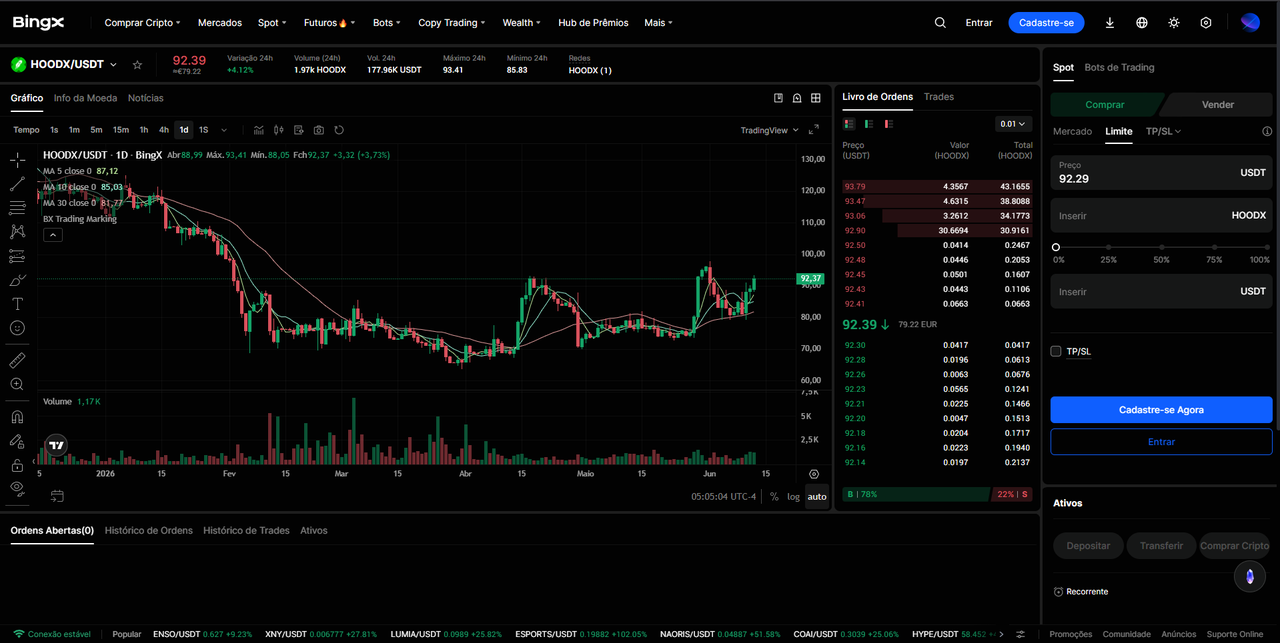
In the spot market, you can trade core RWA ecosystem pairs such as ONDO/USDT, XAUT/USDT, and LINK/USDT, with real-time analytics and risk insights powered by BingX AI. For traders seeking derivatives exposure, the exchange hosts perpetual futures for tokenized equities including AAPLX (Apple), NVDAX (NVIDIA), COINX (Coinbase), HOODX (Robinhood), METAX (Meta), and CRCLX (Circle), tradable with 24/7 liquidity.
Step-by-Step Guide to Getting Started:
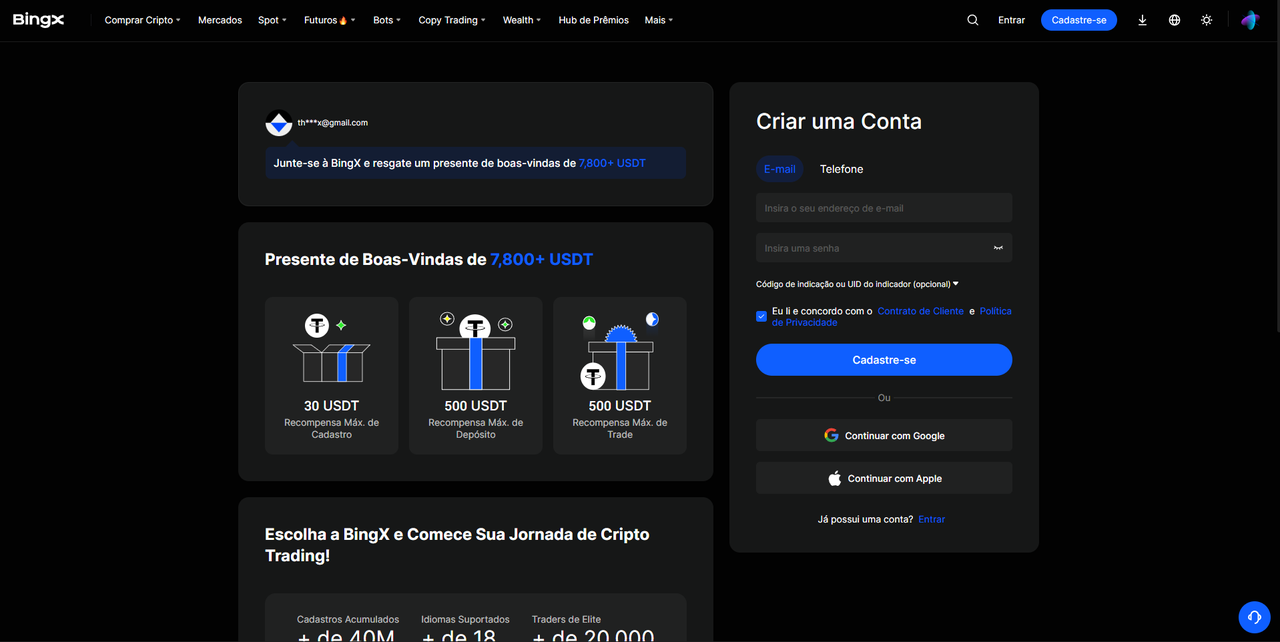
- Head to bingx.com and complete your account registration along with identity verification (KYC).
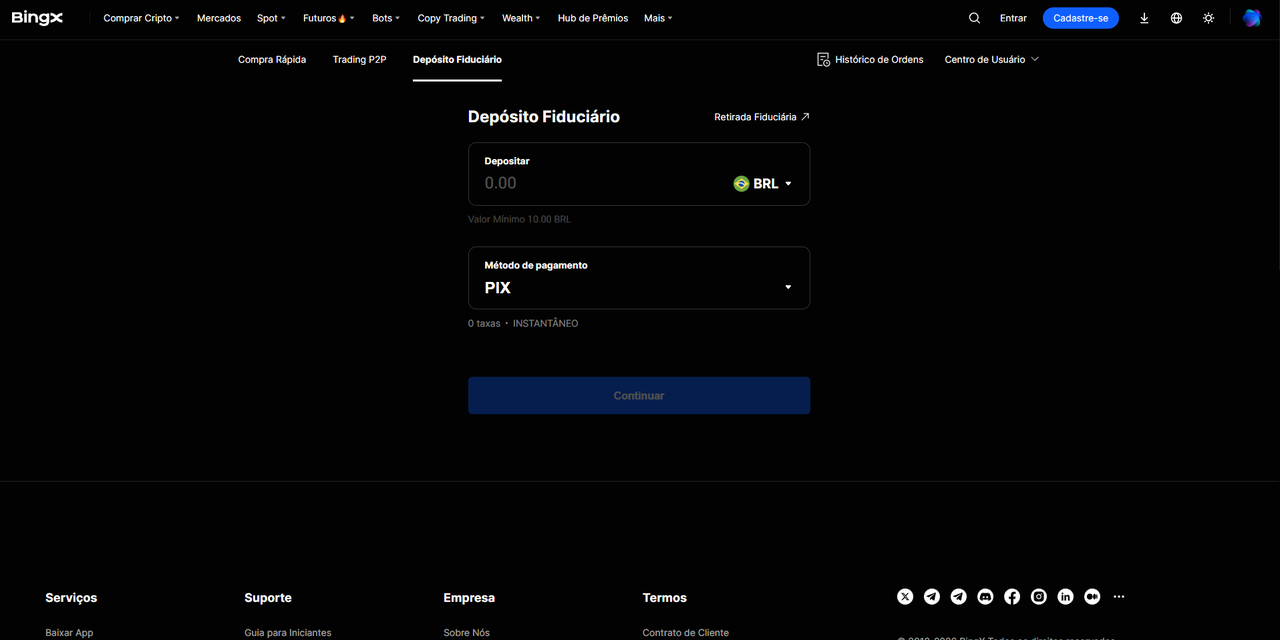
- Deposit USDT via the TRC-20 network for optimized, low-cost transfer fees, or purchase crypto with local fiat via the P2P trading desk using secure local payment methods (such as PIX in Brazil). Review the fiat deposit tutorial if you need assistance.
- To buy spot RWA project tokens: search for your desired pair and configure a limit order to control your entry price, or a market order for instantaneous execution. Limit orders incur lower maker fees compared to taker fees.
- To trade tokenized assets via perpetual futures: navigate to the Futures tab, select the asset pair, define your leverage multiplier, and choose your margin mode.
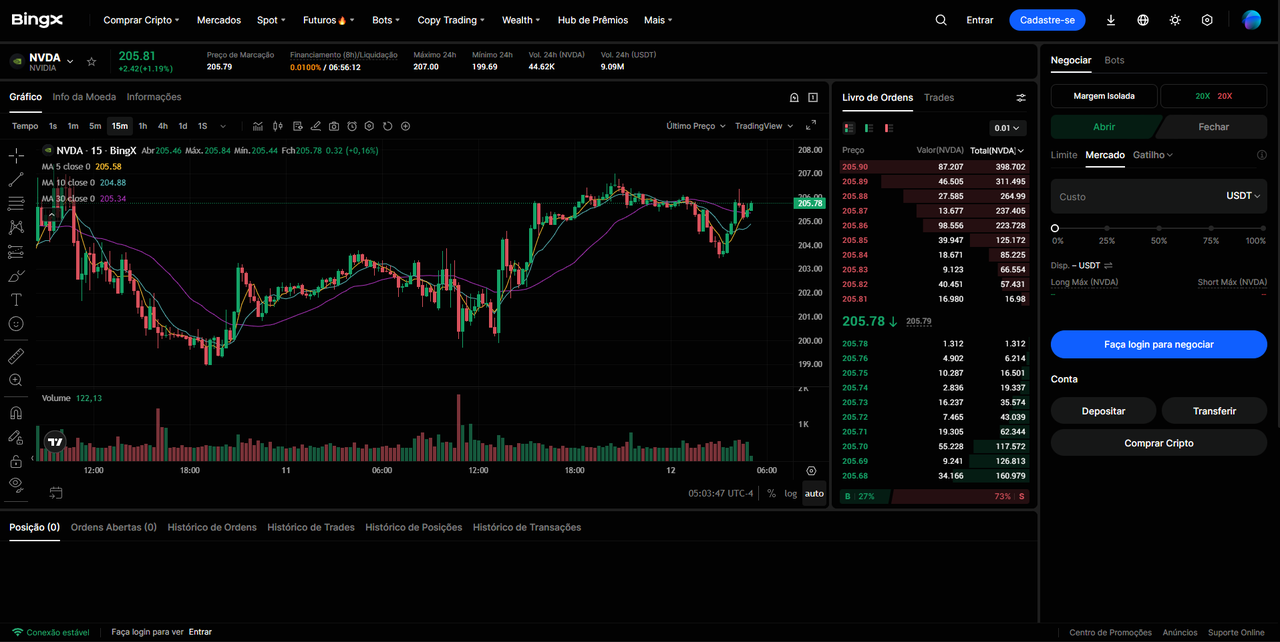
For futures positions, BingX supports Isolated Margin and Cross Margin modes. Isolated Margin restricts your downside risk strictly to the capital allocated to that specific position. Cross Margin shares your account balance across positions to avoid liquidation during brief volatile spikes, which adds flexibility but exposes your entire account equity. For those starting out with tokenized asset futures, Isolated Margin is highly recommended. Always utilize stop-loss and take-profit orders before executing any leveraged trades.
Top RWA Projects Dominating the Market in 2026
Ondo Finance (ONDO): Ondo has established itself as a market leader in tokenizing short-term US Treasury bills. Its flagship institutional fund product, OUSG, boasts hundreds of millions of dollars in TVL distributed across Ethereum, Solana, and Polygon, yielding highly competitive yield percentages backed by monthly asset audits. You can trade ONDO/USDT directly on the BingX spot market.
Chainlink (LINK): The industry-standard decentralized oracle infrastructure connecting off-chain data streams to on-chain smart contracts. Without robust oracles, the majority of the RWA sector would cease to function; they ensure that on-chain token values dynamically reflect real-time asset pricing. The LINK/USDT pair is available for both spot and perpetual futures trading on BingX.
Plume (PLUME): An L1 blockchain built exclusively for real-world assets. Plume natively simplifies the tokenization of real estate, private credit, ETFs, and commodities, while embedding native AI application layers to optimize asset management.
Pendle (PENDLE): A yield-tokenization protocol that allows users to separate and trade the principal and yield components of an asset independently. This opens advanced yield-trading strategies for predictable cash-flow assets and pairs exceptionally well with stablecoin passive income optimization.
Tether Gold (XAUT): A gold-backed token offering 1:1 ownership of physical gold held in audited Swiss vaults. Each token represents one fine troy ounce of London Good Delivery gold. To secure XAUT off-exchange, ensure you route it to a hardware wallet compatible with the ERC-20 token standard.
FAQ: Frequently Asked Questions About RWA Asset Tokenization
1. What does RWA mean in crypto?
RWA stands for Real-World Asset. In the crypto ecosystem, it refers to any physical or traditional financial asset that exists off-chain and has been represented as a digital token on a blockchain network. The token encapsulates the economic rights of the underlying asset and can be traded on exchanges just like any other crypto asset.
2. What is the difference between an RWA token and a standard cryptocurrency?
Native cryptocurrencies like Bitcoin and Ethereum are not backed by physical assets; their value is derived from market demand, network utility, and programmatic monetary policies. Conversely, RWA tokens are always tethered to a tangible or legal counterpart off-chain. While this backing tends to reduce purely speculative volatility, it introduces counterparty risk related to the custodian and the legal structure securing the physical asset.
3. How does real estate tokenization work in Brazil?
The property is legally transferred to an SPV (Special Purpose Vehicle) or an equivalent corporate entity, which then issues tokens representing fractional shares of the economic rights of that asset. Investors purchase these tokens, receive automated yield distributions via smart contracts, and can liquidate their positions on secondary markets. Projects structured under CVM Resolution 88 already enjoy clear legal compliance, while tokenization involving direct title deeds and transfer of ownership is currently awaiting specific, dedicated regulations.
4. Are RWA investments subject to income tax in Brazil?
Yes. The Brazilian Federal Revenue Service (Receita Federal) treats RWA tokens as financial assets, making both yield distributions and capital gains taxable. The reporting protocol aligns closely with standard financial instruments. Investors should always consult a specialized crypto accountant to ensure accurate filing.
5. Is it safe to invest in RWAs?
Like any asset class, RWAs carry distinct risks: custody failures of the underlying asset, thin secondary market liquidity, evolving regulatory frameworks, and oracle vulnerabilities. The fact that an asset is deployed on a blockchain does not eliminate the counterparty risk of the issuer. Projects featuring independent third-party audits, verifiable Proof of Reserves (PoR), and transparent legal setups offer the lowest relative risk profiles.
6. What is the difference between RWA and DeFi?
DeFi (Decentralized Finance) is an ecosystem of financial protocols that run entirely on-chain using native crypto assets without physical backing. RWA and DeFi are increasingly converging: RWA tokens can be deposited as collateral inside DeFi lending pools, while DeFi protocols construct yield markets for these tokenized assets. They function as complementary layers rather than mutually exclusive sectors.
7. Will tokenization completely replace traditional investment funds?
Not in the short term. Traditional funds benefit from deeply consolidated regulatory protections, professional management track records, and established tax structures. RWAs, on the other hand, offer programmatic composability, 24/7 trading finality, and ultra-fractionalized access. For most portfolios, it is more practical to view RWAs as an alternative diversification tool rather than an immediate replacement for legacy funds.
Key Takeaways
- Asset tokenization (RWA) converts physical or financial holdings into digital tokens on a blockchain, unlocking fractional ownership, secondary market liquidity, and 24/7 trading access.
- The global market surpassed $24 billion in 2025 and is projected to scale into hundreds of billions by 2030, with private credit and tokenized US Treasuries leading institutional adoption.
- In Brazil, cumulative tokenized issuances have cleared R$ 1.5 billion, propelled by CVM Resolution 88 and the ongoing rollout of Drex (the digital real).
- Smart contracts automate yield distribution and trade execution, but the ultimate security of the token remains fundamentally tied to the legal and physical custody of the underlying asset.
- BingX enables seamless trading of leading RWA tokens like ONDO, XAUT, and LINK on its spot market, alongside tokenized equities such as AAPLX, NVDAX, and COINX via USDT-settled perpetual futures.
- Before allocating capital: thoroughly evaluate the custody framework, verify proof of reserves, assess secondary market liquidity, and confirm the asset's local regulatory posture.
- Decentralizing transaction infrastructure does not eliminate centralized counterparty risk.
